In this post, you will learn:
- What the new ChatGPT search study examined
- How ChatGPT access is affecting traditional search behavior
- Why AI search sends fewer users to outside websites
- Which types of searches and websites may be affected most
- What these changes mean for SEO, content strategy, and website traffic
- How businesses can adapt to search behavior shaped by AI
Artificial intelligence is changing the way people search for information, and new research is beginning to show just how significant that shift may be.
A recent study of U.S. desktop browsing behavior found that broader access to ChatGPT Search was associated with a 9.4% decline in traditional search activity. The research also found that ChatGPT sent users to outside websites far less often than Google, suggesting that more people may be getting the answers they need without clicking through to another source.
For businesses, this does not mean search engine optimization is becoming irrelevant. It means the relationship between search visibility, website traffic, and customer discovery is evolving. Informational content may receive fewer clicks, while specialized, authoritative websites may have new opportunities to appear in AI-generated answers and recommendations.
In this post, we examine what the study found, what it may mean for website traffic and SEO, and how businesses can adapt their content strategies as AI becomes a larger part of the search process.
What Did the ChatGPT Search Study Examine?
The study, titled Answering Without Referring: How AI Search Rewrites the Web’s Economic Bargain, looked at how access to ChatGPT Search affected people’s use of traditional search engines.
The researchers analyzed URL-level Comscore browsing data from U.S. desktop users between October 2024 and July 2025. They compared information-seeking sessions on ChatGPT with searches conducted through Google and examined what happened as ChatGPT Search became available to a broader group of users.
They were primarily trying to answer two questions:
- Does access to ChatGPT cause people to use traditional search less often?
- When ChatGPT does send users to another website, where does that traffic go?
This distinction is important. The study was not simply measuring how many people use ChatGPT or comparing the popularity of ChatGPT and Google. It was examining whether people changed their existing search habits once they had access to an AI tool that could answer questions directly.
I have worked in digital marketing since 2005, and nearly every major change in search has affected where people look, what they click and how much information they receive before reaching a website. Featured snippets, local results, knowledge panels and AI Overviews have all reduced the need to click for certain types of information.
ChatGPT takes that behavior a step further. Instead of displaying a list of websites and asking the user to choose one, it can gather information, summarize it and continue answering follow-up questions within the same conversation.
That changes the traditional relationship between websites and search platforms. Businesses publish useful content, search engines organize it and, historically, the website receives traffic in return. The researchers refer to this as the web’s “referral bargain.” Their findings suggest that AI can use information to satisfy a search without sending nearly as many users back to the sites that helped provide the answer.

It is also worth noting that this paper was released as an arXiv preprint in July 2026. That means the research is newly published and should not be treated as the final answer on how AI will affect every search, website or industry. Still, it provides useful real-world data that supports something many of us in SEO have already been watching happen: the search can occur even when the website visit does not.
The Most Important Findings from the Study
The study identified several ways ChatGPT Search may be changing how people find information and move around the web. The 9.4% decline in traditional search use makes a strong headline, but it is only one part of the story.
Traditional Search Use Declined by 9.4%
The study identified several ways ChatGPT Search may be changing how people find information and move around the web. The 9.4% decline in traditional search use makes a strong headline, but it is only one part of the story.
Traditional Search Use Declined by 9.4%
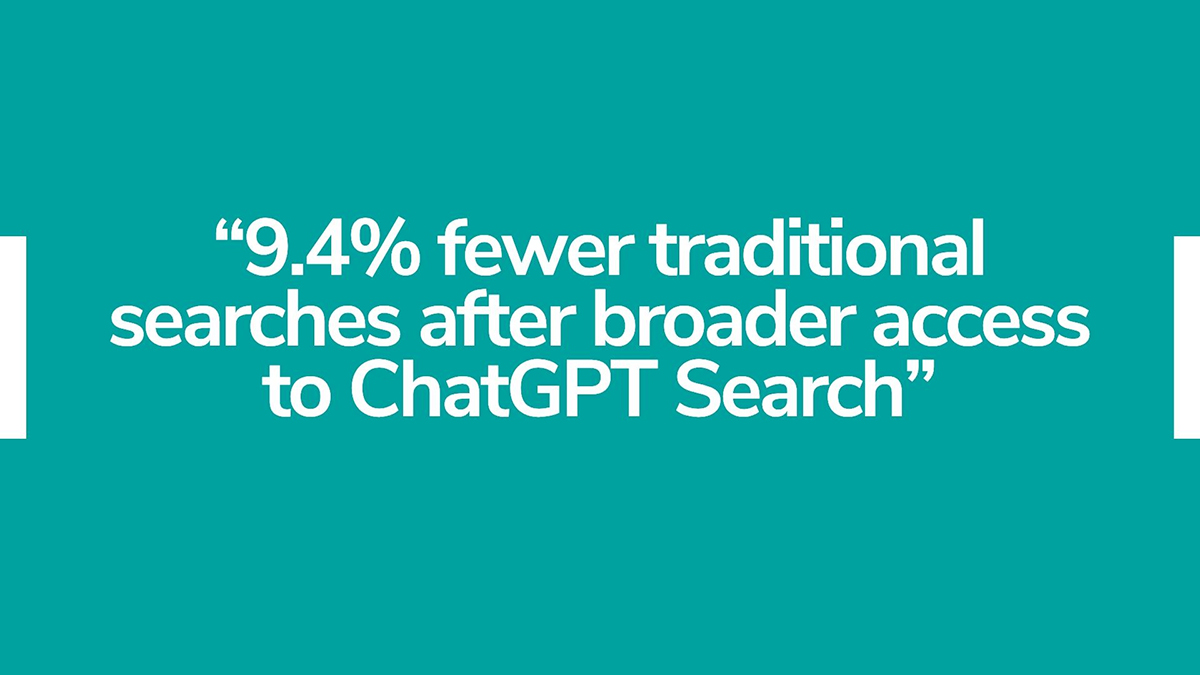
Researchers found that broader access to ChatGPT Search was associated with an average 9.4% reduction in traditional search queries. After 20 weeks, the estimated decline reached 17%.
That does not mean every business should expect its Google traffic to fall by 9.4%. The study measured changes in search behavior among the users and households included in the research. It did not measure a universal decline across every website, industry or type of search.
Still, the findings support what we have been discussing with clients for some time. People now have more ways to get answers without starting with Google.
When I began working in SEO in 2005, most online research followed a fairly predictable path. Someone entered a search, reviewed the results and clicked through to one or more websites. Today, that same person may start with ChatGPT, ask several follow-up questions and only visit a website once they need more detail, want to verify something or are ready to take action.
ChatGPT Sends Far Fewer Users to Outside Websites
The study found that ChatGPT generated an outbound click in only 5.2% of conversation sessions, compared with 31.1% of Google searches.
Similar behavior has been observed in Google Search. A Pew Research Center analysis found that users clicked a traditional search result in 8% of visits when an AI summary appeared, compared with 15% when no AI summary appeared. Users clicked a source within the AI summary itself in only 1% of visits.
This may be the most important finding for publishers, marketers and business owners.
Google generally provides a list of results and encourages the user to choose a destination. ChatGPT is designed to provide a direct, synthesized response. In many cases, the user can get enough information from that response without visiting another website.
We already see versions of this behavior in traditional search through featured snippets, knowledge panels and AI-generated summaries. ChatGPT simply keeps more of the experience inside the conversation.
For businesses, this means ranking, appearing in an AI response and receiving a website visit are no longer the same thing. A company may influence an answer or gain visibility without seeing a corresponding referral in its analytics.
Informational Searches Were Affected the Most
The decline in traditional search was concentrated most heavily in informational categories.
This makes sense. AI tools are particularly useful when someone wants a definition, summary, explanation or starting point for research. The user can ask a question in natural language and continue refining the answer without repeatedly searching and opening new pages.
Generic informational content is therefore likely to face more pressure than content connected to a specific decision, location, provider, product or service.
For example, someone may use ChatGPT to ask:
- What is technical SEO?
- What is the difference between a will and a trust?
- How does outpatient addiction treatment work?
But they may still turn to Google, maps, reviews and individual websites when searching for:
- An SEO company with experience in their industry
- An estate planning attorney near them
- A treatment center that accepts their insurance
The informational part of the journey may happen inside AI, while the comparison and decision-making stages still lead people to other platforms and websites.
ChatGPT Referrals Lead to Different Types of Websites
The smaller amount of traffic sent by ChatGPT was not simply a reduced version of Google referral traffic.
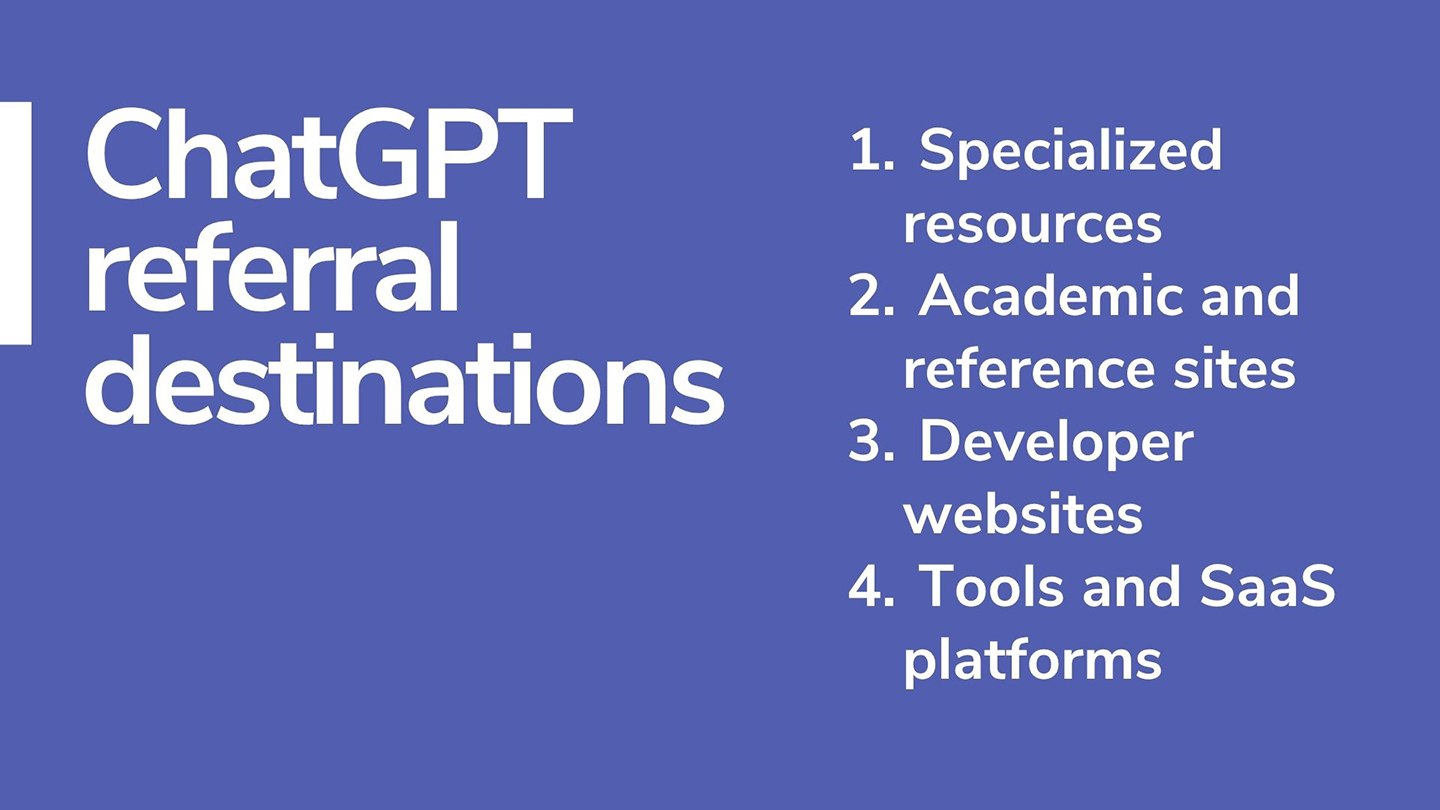
The researchers found that ChatGPT referrals were more likely to lead to specialized resources, reference sites, academic sources, developer websites and tools or SaaS platforms. Google referrals were more concentrated among large, familiar destinations.
That may create an opportunity for businesses that publish genuinely useful, specialized information.
At Eminent SEO, we have always encouraged clients to go beyond broad content that could apply to almost any company. The strongest resources usually come from real experience, such as answering questions customers repeatedly ask, explaining a complicated process, publishing original data or sharing insight that is specific to an industry or location.
AI can summarize generic information very easily. It has more reason to reference a website when that site contributes something specific, credible and difficult to replace.
Does This Mean ChatGPT Is Replacing Google?
Not exactly.
The study shows that ChatGPT is changing some search behavior, especially for informational questions. It does not show that people are abandoning Google altogether.
In fact, one of the more interesting things I have been seeing is a dip in organic website traffic alongside improvements in branded and direct traffic. That suggests the journey may be changing rather than disappearing.
Someone may start by asking ChatGPT a question, use AI to narrow down their options, then return to Google to search for a specific company, read reviews or visit the website directly. In that case, the original discovery happened through AI, but the final visit may show up as branded search or direct traffic instead of a traditional organic click.
We see this across many of the industries we work with at Eminent SEO. A potential client might use AI to learn what an SEO audit includes, but they still need to research agencies, review case studies and decide who they trust. A patient may ask ChatGPT about treatment options, but they still need to find a provider, confirm insurance coverage and schedule an appointment.
This changes the buyer’s journey, but it does not reduce the importance of a strong website or a broader marketing strategy. If anything, it makes those things even more important. By the time someone searches for your brand directly, they may already have formed an opinion based on what they found through AI, search results, reviews, social media and other sources.
So I would not be too alarmed by every shift in organic traffic. Some of that traffic may be moving through a different path. The more important question is whether branded searches, direct visits, leads and conversions are also changing.
AI may take over part of the research process, but businesses still need a credible website, strong reviews, consistent branding and clear information when people are ready to take the next step.
What This Means for SEO and Content Strategy
SEO still matters, but the way we evaluate it needs to evolve.
Google has also confirmed that foundational SEO practices remain relevant to generative AI search. Its guidance recommends creating original, useful content, maintaining a clear technical website structure and making information easy for search systems to access and understand.
For years, businesses have looked at organic traffic as one of the clearest measures of SEO success. That metric is still important, but it no longer tells the whole story. If users are starting their research in ChatGPT, Gemini or another AI platform, then returning later through a branded search, direct visit, review platform or social channel, traditional attribution may miss part of that journey.

That is why I think businesses need to look beyond total organic sessions and pay closer attention to:
- Branded search growth
- Direct traffic
- Leads and conversions
- Returning visitors
- Review activity
- Engagement with service and conversion pages
Content strategy also needs to become more specific and more useful. Generic informational posts are easier for AI to summarize without sending the user to a website. Content based on firsthand expertise, original data, real examples, detailed comparisons and clear answers is much harder to replace.
At Eminent SEO, we have always pushed clients to create content around the questions their customers actually ask, not just broad topics with search volume. That approach matters even more now. The goal is not only to rank. It is to become a source that people and AI platforms recognize as credible, useful and worth referencing.
Businesses should also make sure the rest of their digital presence supports that authority. A strong website, accurate local listings, reviews, social proof, brand mentions and consistent messaging all help users confirm that they have found a company they can trust.
AI may shorten part of the research process, but it also raises expectations. When someone finally reaches your website, the content needs to be clear, current and convincing.
How Businesses Should Respond
Businesses do not need to abandon SEO or completely rebuild their marketing strategy because of AI. But they should make a few practical adjustments.
Create More Useful, Experience-Based Content
Generic content is becoming easier for AI to summarize. Businesses should focus on content that reflects real experience, expertise and customer needs.
That may include:
- Original research or data
- Case studies
- Firsthand observations
- Detailed comparisons
- Industry-specific examples
- Answers to questions customers regularly ask
- Tools, calculators, checklists and downloadable resources
The more specific and useful the content is, the more value it provides beyond a basic AI-generated answer.
Strengthen Your Brand Across Multiple Channels
People may discover a business through AI, then verify it through Google, reviews, social media, local listings and the company website.
That means businesses need consistent information and a credible presence across all of those channels. A strong brand becomes even more valuable when users are moving between multiple platforms before making a decision.
Protect Your Most Important Website Pages
Informational traffic may shift, but service, product and location pages still play an important role in converting visitors.
Businesses should make sure these pages clearly explain:
- What they offer
- Who they help
- Why someone should choose them
- What the next step is
- Where they are located
- How to contact them
The website still needs to do the work of building trust and turning interest into action.
Review the Full Customer Journey
Organic traffic should not be evaluated in isolation. Look at whether people are reaching the business through branded search, direct traffic, reviews, email, social media or referrals after completing their initial research somewhere else.
At Eminent SEO, we are paying closer attention to those shifts because they provide a more complete picture of how people are finding and choosing businesses today.
The goal is not to chase every new AI trend. It is to make sure your brand is visible, credible and easy to find wherever the customer decides to look next.
Relevant reading: How to Map Out a Buyer’s Journey
The Future of Search Is a Broader Visibility Strategy
Search is no longer limited to Google.
People now discover businesses through AI platforms, social media, video, review sites, local listings, online communities and traditional search results. They may move between several of these channels before ever reaching a website.
I have watched search evolve for more than 20 years, and every major shift has changed the way people find information. What has not changed is the need for businesses to be visible, credible and helpful at the moment someone is making a decision.
ChatGPT may reduce some informational searches and website clicks, but that does not make websites less important. It makes the quality of the website, the strength of the brand and the consistency of the overall marketing presence even more important.
A business may first appear in an AI-generated answer, then be researched through Google, reviews, social media and its website before the customer takes action. That journey is more fragmented, but every part of it still matters.
The businesses that adapt well will not focus only on rankings or traffic. They will build a broader visibility strategy that connects SEO, content, branding, reviews, local search and conversion optimization.
AI is changing how people search, but it is not eliminating the need to earn trust.
Contact Eminent SEO for Help
The study gives us valuable insight into how ChatGPT is changing traditional search behavior. It also reinforces something we have been seeing firsthand: fewer organic clicks do not always mean less interest or fewer opportunities.
The buyer’s journey is changing. People may begin their research in AI, continue through branded search and reviews, and reach the website later in the process.
That is why businesses should not panic over every shift in organic traffic. Instead, they should look at the full picture, including branded visibility, direct traffic, leads, conversions and how well their digital presence supports the customer journey.
The goal is not to choose between SEO and AI. It is to build a strategy that helps people find, recognize and trust your business wherever they search.
Is your search strategy keeping up with the way people find businesses today?
Eminent SEO helps businesses strengthen their visibility across search, content, websites and emerging AI platforms.
Talk to Our TeamSources:
- Shi, Qiaoni, Kai Zhu and Kai Gu. “Answering Without Referring: How AI Search Rewrites the Web’s Economic Bargain.” arXiv, July 8, 2026.
- Chapekis, Athena, et al. “Do People Click on Links in Google AI Summaries?.” Pew Research Center, July 22, 2025.
- Google Search Central. “Optimizing Your Website for Generative AI Features on Google Search.” Google for Developers, July 2026.