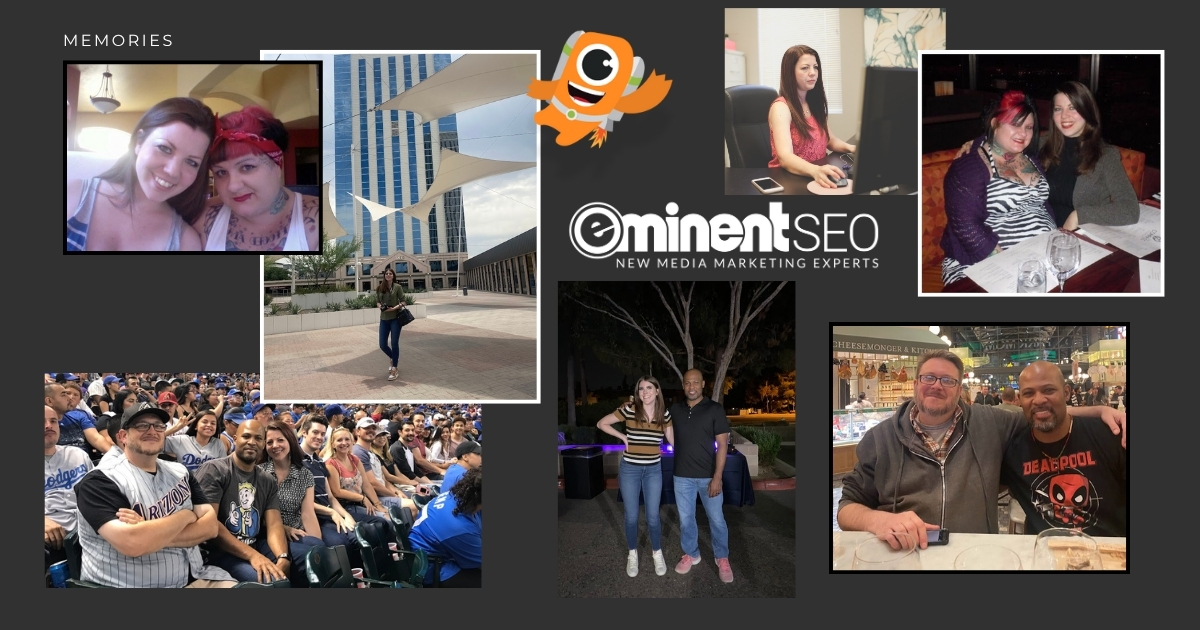
Sixteen years. That’s wild to even say out loud. When we started Eminent SEO back in 2009, it was just a few friends, a Hotmail account, an Excel sheet, and a lot of grit (and caffeine). No office, no funding, no fancy tech – just a belief that we could build something real. Something better.
A lot has changed since then. We’ve gone from late nights building links to developing brand portfolios, content systems, creative campaigns, and ROI-driven marketing strategies. We’ve seen platforms rise and fall, algorithms rewrite themselves, and the digital world reinvent how business works more times than we can count.
But through it all, the core stayed the same: good people doing great work.
16 Lessons from 16 Years in Business
Sixteen years in business means a lot of coffee, a lot of Google updates, and a lot of learning. Some lessons came easy. Others… not so much.
But every one of them helped shape who we are: as people, as marketers, and as a team.
Here are a just few of the things we’ve learned along the way:
Heading into our 17th year, our focus is simple: keep creating work we’re proud of, keep helping our clients grow, and keep building a company that cares about people as much as performance.
To our clients, team, and friends who’ve been part of this wild ride: thank you! You’re the reason we get to do what we love every day.
Sixteen years down, and it’s only up from here!
AI, SEO & LLMs: The Future of Search
Large language models like ChatGPT and Gemini are changing how people search and consume information.
It’s not about ranking for keywords anymore – it’s about showing up in the AI-generated answers.
That means adopting AEO (Answer Engine Optimization) and GEO (Generative Engine Optimization) so content is structured, machine-readable, and ready for AI to pull in.
“We’ve been through so many changes, but one thing that never changes is that it’s all about the people. You can have great players, but if they can’t play together, you’re not going to make it.”
Jenny Weatherall
Featured Service
AI Marketing & SEO Optimization (GEO)
We help brands stay visible in AI-driven search by optimizing for Google AI Overviews, ChatGPT, Gemini, and more. Our Generative Engine Optimization approach blends AI tools with human expertise to structure, personalize, and future-proof content – so it’s ready to appear in both traditional search results and AI-generated answers.
Eminent SEO provides strategic SEO campaigns with measurable results along with expert website design, development, pay per click, content and social media and organic website marketing. 800.871.4130.
Google’s AI Mode may become the default, but Google says not just yet.
Welcome to GEO (Generative Engine Optimization) – a new way to optimize for visibility in AI-generated answers. What is GEO?
GEO performance is hard to measure – we explain what shows up, what doesn’t, and what to do about it. Measuring GEO
We break down what you can measure, what you can’t, and how to optimize anyway.
AI continues to reshape the way we think about content, search, and visibility – but it’s not always clear what’s signal and what’s noise.
Last week’s back-and-forth from Google about AI Mode becoming the default search experience sent SEOs into overdrive. Some insiders say it’s “coming soon.” Others say, “don’t read too much into that.” Either way, one thing is certain:
AI-powered search is here, and we need to be optimizing for it now, not later.
AI Mode May Become the Default Search Experience (Or… Maybe Not Just Yet)
Google’s AI Mode is now live at google.com/ai, offering AI-powered answers, comparisons, and follow-up questions in a cleaner, more “conversational” interface.
Yes, Logan Kilpatrick (Google PM) said it would become the default “soon,” but VP Robby Stein clarified not to read too much into that. So for now, AI Mode is opt-in – but growing fast.
As it spreads, it’s bringing a new challenge: How do you measure visibility and impact when clicks disappear and citations replace rankings?
GEO: What We Can and Can’t Track (Yet)
Generative Engine Optimization (GEO) is the emerging practice of optimizing content to show up in AI-generated responses – whether in Google AI Overviews, ChatGPT, Perplexity, or Gemini.
But here’s the kicker: visibility doesn’t mean traffic, and performance data is murky at best.
What’s trackable right now:
AI mentions and citation rate: Tools are emerging to track when your brand is cited in generative answers. High citation = the new “Position 1.”
Referral traffic from generative engines: Some platforms link back to your site. You can segment this traffic, though it’s messy.
Share of voice in AI answers: How often your brand shows up in response to core queries.
Content prominence: Where you appear in the AI response (first bullet? buried in a footnote?).
What’s still missing:
Prompt volume: Unlike keyword search, generative engines don’t show how many people ask about your topic.
Why a citation happened: You might know you were cited, but not what triggered it.
Attribution blending: When multiple sources are synthesized, you don’t know how much credit your content gets.
The visibility you gain may not show up in GA or GSC, but that doesn’t mean it’s not influencing behavior.
“Act as a generative engine. Here’s my article. Would you cite it in response to this question? Why or why not?”
Tool to Watch:
We’re testing new AI SEO tools that track brand mentions in AI responses across ChatGPT, Perplexity, and Google AI. Hit us up if you want our shortlist.
Final Word
GEO isn’t about chasing rankings, it’s about earning trust from machines. That means clarity, consistency, and credibility are your most important assets. The next wave of SEO success belongs to brands who can show up, even when there’s no click.
The SEO Strategy Reset
The old tactics - keyword stuffing, chasing backlinks, and posting for posting’s sake - no longer deliver real results. With AI answering users directly in search, content without original insight and value simply won’t be seen.
What’s working now:
focused content clusters, experience-driven perspectives, structured data, lightning-fast mobile performance, and building true user trust over vanity metrics.
Large language models like ChatGPT and Gemini are changing how people search and consume information. It’s not about ranking for keywords anymore - it’s about showing up in the AI-generated answers.
That means adopting AEO (Answer Engine Optimization) and GEO (Generative Engine Optimization) so content is structured, machine-readable, and ready for AI to pull in.
We’re rethinking how content is created - clear question-and-answer formats, robust schema markup, and entity-based optimization so AI systems can easily understand and recommend it.
I’m also leveraging AI tools to audit and refine content, making sure it stays competitive even in zero-click environments.
When someone on X (formerly Twitter) said AI Mode should be the default, a Google Product Manager for AI, simply replied:
“soon :)”
Logan Kilpatrick
Featured Service
AI Marketing & SEO Optimization (GEO)
We help brands stay visible in AI-driven search by optimizing for Google AI Overviews, ChatGPT, Gemini, and more. Our Generative Engine Optimization approach blends AI tools with human expertise to structure, personalize, and future-proof content - so it’s ready to appear in both traditional search results and AI-generated answers.
Eminent SEO provides strategic SEO campaigns with measurable results along with expert website design, development, pay per click, content and social media and organic website marketing. 800.871.4130.
The AI Takeover: What It Means for Your SEO, Strategy, and Search Visibility
Hi There!
I’ve been digging deep into where search is headed – reading, researching, and testing – and one thing is clear: the SEO playbook we’ve all relied on has changed dramatically.
I recently pulled together three articles on our blog that explore what’s happening. Here’s the condensed takeaway:
The SEO Strategy Reset
The old tactics – keyword stuffing, chasing backlinks, and posting for posting’s sake – no longer deliver real results. With AI answering users directly in search, content without original insight and value simply won’t be seen.
What’s working now:
focused content clusters, experience-driven perspectives, structured data, lightning-fast mobile performance, and building true user trust over vanity metrics.
Large language models like ChatGPT and Gemini are changing how people search and consume information. It’s not about ranking for keywords anymore – it’s about showing up in the AI-generated answers.
That means adopting AEO (Answer Engine Optimization) and GEO (Generative Engine Optimization) so content is structured, machine-readable, and ready for AI to pull in.
We’re rethinking how content is created – clear question-and-answer formats, robust schema markup, and entity-based optimization so AI systems can easily understand and recommend it.
I’m also leveraging AI tools to audit and refine content, making sure it stays competitive even in zero-click environments.
Bottom line: SEO hasn’t disappeared – it’s evolved. Now it’s about depth, structure, authority, and AI-readiness. The agencies that adapt early will lead the way for their clients in this new search landscape.
If you’re curious about the full articles or want to share your own thoughts, just hit reply – I’d love to compare notes.
Here’s to building the next era of search,
Jenny Weatherall, CEO
Eminent SEO
Quote of the Month:
“We’re not on version 2.0 anymore, we’re at SEO 25.0”
Chris Beckley
Featured Service
AI Marketing & SEO Optimization (GEO)
We help brands stay visible in AI-driven search by optimizing for Google AI Overviews, ChatGPT, Gemini, and more. Our Generative Engine Optimization approach blends AI tools with human expertise to structure, personalize, and future-proof content – so it’s ready to appear in both traditional search results and AI-generated answers.
Eminent SEO provides strategic SEO campaigns with measurable results along with expert website design, development, pay per click, content and social media and organic website marketing. 800.871.4130.
Search just shifted again. Google rolled out its June 2025 Core Update, and this one could be big. Not only is it rooted in AI advancements, but the messaging from Google hints that smaller, previously underrecognized sites may now get more visibility. That’s good news for high-quality niche content creators.
We’re also watching Google’s latest AI-powered ranking systems and something called MUVERA that might change how websites are discovered altogether.
Let’s dive into what this means, and how to stay ahead.
Google’s June 2025 Core Update: What You Need to Know
Google just announced its June 2025 Core Update, calling it “a regular update designed to better surface relevant, satisfying content for searchers from all types of sites.” That last part is key, Google may be shifting toward more diversity in what it surfaces, potentially giving a boost to smaller or lesser-known sites.
What’s behind this? Likely more AI advancement.
Here’s what we’re watching:
MUVERA (Multi-Vector Embedding Retrieval Architecture) – Google says it’s now easier to precisely retrieve and re-rank content using neural embeddings.
Expect results to feel more context-aware and exact.
Timing suggests the update aligns with or is leading up to a new version of Gemini AI.
Our take: Content relevance and satisfaction signals are more important than ever. Sites that focus on helpful, nuanced content will have an edge – especially if they’re optimized for semantic and vector-based search retrieval.
Let’s Talk Strategy:
While many SEOs are scrambling to adapt, here’s your edge, focus on:
Topical authority – Publish content clusters that deeply explore your subject matter.
Clear structure – Help search engines understand your content with headers, internal links, and clean formatting.
User experience – Fast load times, accessible design, and satisfying content = better rankings.
Gemini updates drive SEO shifts: Most recent core updates have dropped within 1–2 weeks of major Gemini model releases.
Structured content matters: Google’s AI is improving at identifying sections of content that meet search intent – make yours scannable and structured.
Featured Blog Post
Adapting Your SEO Strategy for AI-Driven Search
As Google’s ranking systems evolve, so should your SEO strategy. In our latest post, we explore what AI-powered search really means—breaking down MUVERA, Gemini, and how semantic relationships are reshaping search results. Whether you’re a business owner or a strategist, this is your roadmap to staying visible in the age of AI.
Eminent SEO provides strategic SEO campaigns with measurable results along with expert website design, development, pay per click, content and social media and organic website marketing. 800.871.4130.
Lately, I’ve been in conversations with clients, teammates, and even competitors, and one thing’s become clear: SEO as we knew it is gone. It’s not dramatic. It’s just the truth. Google is rolling out features faster than most people can follow, but that’s what we’re here for.
This month, I’m keeping it tight. Just the key insights we’re acting on – the ones worth your time and energy.
Let’s get into it.
AI Mode is Here.
And It Doesn’t Care About Your Rankings
Google’s AI Overviews (also called AI Mode) are live and already changing visibility for millions of keywords.
What we’re seeing:
Only about 13 percent of keywords triggered an AI Overview in March, but the number is growing.
Most URLs featured in AI Mode are not ranked in the top 10 organic results.
AI Mode goes deep. It doesn’t just pull what ranks well; it pulls what answers the question well.
What’s working now:
Structured content with clear takeaways
Pages that include custom visuals
Original, helpful perspectives instead of summaries or rehashed information
Tip: Don’t optimize for keywords. Optimize for the kinds of questions people are really asking.
150 Days or You’re Out
New research confirms that if Google hasn’t crawled your page in 150 days, it likely won’t get indexed.
This is affecting new content, low-authority URLs, and older posts that haven’t been updated or linked to.
What we’re doing for clients:
Running internal linking audits
Checking sitemap and GSC health
Refreshing and republishing content worth keeping
Need help identifying what’s been left behind? Just reply.
“Menu-Based” SEO is the Move
Seth Godin said, “People prefer multiple choice to essay exams.”
This applies to AI tools and user experience. If you’re relying on users or AI to guess what to do next, engagement drops.
How we’re adjusting:
Adding “Ask Me” style prompts under blog sections
Including TLDRs and step-by-step guides
Designing content with modular answers and interaction points
Quick Fix of the Month
Open Google Search Console, go to Crawl Stats.
Look at when your most important pages were last crawled. If it’s been more than 60 days, flag it.
Those pages may be at risk.
Prompt of the Month
Use this in Gemini or ChatGPT to identify content gaps:
“Review this article and tell me what a user would still be confused about after reading it. Suggest content I can add to improve clarity and make it AI Mode-friendly.”
What We Believe Right Now
AI Mode will eventually replace traditional search
Content that includes original insights, structure, and visuals will perform better
Helpful content means anticipating the next question before it’s asked
If your content isn’t truly helping, teaching, or inspiring, AI isn’t likely to surface it.
Final Word
If your content has lost visibility recently, it’s not your fault.
The rules changed. The good news is, we’re already adapting.
If you need help with the next step, we’re ready.
Jenny Weatherall
Featured Service
Data and insights from the SEO audit form the foundation of an SEO strategy. This includes developing a brand’s buyer personas and identifying what their ideal audiences is looking for when they browse the Web. This information can be developed into a website information architecture that satisfies search engines while delighting users.
Eminent SEO provides strategic SEO campaigns with measurable results along with expert website design, development, pay per click, content and social media and organic website marketing. 800.871.4130.
Hey There,
Q2 is here already – if you’re feeling like Q1 flew by and you’re still waiting for your marketing to “click,” you’re not alone. A few smart adjustments this month could make a real difference in how you finish the first half of the year.
Here’s what we’re seeing and what you should be paying attention to right now.
Let’s Talk AI + Search
A few key shifts are happening – and they’re big.
AI Overviews are showing up more often in Google results since the March core update. That means fewer clicks for some sites. If your traffic dipped, this might be why.
You can now track traffic from tools like ChatGPT. If LLMs are quoting or referencing your site, it’s measurable now (thanks to a great Looker Studio template – hit us up if you want it).
Gemini 2.5 is live and powering a lot of these changes. It’s smarter and more context-aware, so the quality bar for content just got higher.
Bottom line: If your site is full of generic, keyword-stuffed content, it’s time to rewrite it – or risk losing visibility
SEO: Local Tips That Still Work
Old-school still wins when done right:
Add your business address to the footer of your site – even if you’re a service-area business. People are testing this and seeing boosts in both organic and local rankings.
Simple fix, real results.
Email: What’s Getting Opens Right Now
Short, helpful, personal. That’s what’s working.
Over-designed emails are underperforming. The more your email looks like a sales flyer, the more it gets ignored.
People want useful info – not just discounts. Give them tips, insights, behind-the-scenes stuff. That builds trust and keeps you top of mind.
What You Should Do in April
If you do nothing else this month:
Refresh 2–3 top-performing pages on your site
Check site speed and fix what’s slowing it down
Segment your email list and test new subject lines
Revisit your lead gen flow – what’s working, what’s not?
Need help? You don’t have to guess. We’re doing this stuff every day, and we’d love to help you move the needle. Reply to this email and let’s talk strategy.
Until next time,
Jenny Weatherall & the Eminent SEO Team
Featured Service
Powerful Email and Newsletter Marketing Services
Here at Eminent SEO, we offer email marketing services to help you stay in constant contact with your prospects, supply them with enticing offers and share useful information about your company. A smart email marketing campaign includes great branding, impactful design, focused content and established tracking metrics. We can help you do it all.
Eminent SEO provides strategic SEO campaigns with measurable results along with expert website design, development, pay per click, content and social media and organic website marketing. 800.871.4130.
Q1 is moving fast, and if you’re not seeing the leads or results you expected, it’s time to pivot. We’ve been tracking SEO updates, email marketing strategies, and Google’s latest changes, and here’s what you should be focusing on this month.
No fluff – just actionable insights.
Good to Know in SEO & Digital Marketing
Staying ahead of search engine and marketing changes is key to long-term success.
Here’s what’s happening right now:
Google Cracks Down on ‘Parasite SEO’ – Google is penalizing sites that host unrelated third-party content (think spammy affiliate pages). If your SEO strategy involves third-party content hosting, it’s time to rethink your approach. (The Verge)
Authentic, Human Content Is Winning – Google and users are favoring real, human-written content over AI-generated spam. If you’re relying too heavily on AI to create content, make sure you’re adding real expertise and value. (Wired)
AI Search & SEO Are Evolving – Google’s Gemini 2.0 and AI-powered search are changing how search results work. The focus? More intent-driven results with less reliance on traditional rankings. If you’re not adapting, you’ll start falling behind. (Forbes)
Your Website: Is It Helping or Hurting Your Business?
Your website should be a sales tool, not just a digital brochure. If it’s not bringing in leads, it’s time to fix what’s broken.
Speed matters. If your site is slow, visitors leave. Run a speed test (Google PageSpeed Insights is free) and fix anything that’s slowing it down.
Are your calls to action clear? If someone lands on your homepage, is it obvious what they should do next? Make sure your CTAs are easy to see and use.
Content needs to stay fresh. Google rewards updated content. If you haven’t touched your top-performing pages in over a year, update them now.
What to do this month:
Run a site speed test and fix issues.
Check your forms—are they simple and working?
Look at your top 10 landing pages and make sure they’re optimized for conversions.
[/su_lis]
Email & Automation: Stop Letting Leads Slip Away
Most businesses don’t need more leads—they need to convert the ones they already have.
Automate your follow-ups. Most people won’t buy or book on the first visit. A well-timed follow-up email can make the difference.
Segment your list. Not every subscriber should get the same message. Personalization increases open rates and sales.
Improve your email engagement. If your open rates are low, test new subject lines. If clicks are low, simplify your emails and focus on one clear call to action.
What to do this month:
Set up automated emails for new leads.
Test a new subject line strategy.
Clean up your email list—remove inactive subscribers.
Content & Social Media: Less Noise, More Impact
If you’re posting all the time and getting nothing in return, it’s time to rethink the strategy.
Post less, but better. One well-thought-out post will do more for your business than five generic ones.
Repurpose your best content. If a blog is performing well, turn it into an email, LinkedIn post, or short video.
Use video, but keep it simple. You don’t need fancy production—quick insights and behind-the-scenes content go further.
What to do this month:
Look at what’s working and do more of it.
Repurpose your best-performing content.
Test a short-form video, even if it’s just a quick business tip.
The One Thing to Prioritize in March
If you do nothing else this month, optimize your website and automate lead follow-ups.
A slow site and a messy sales funnel are costing you business. Fix them now.
Need help figuring it all out? Reply to this email and let’s chat.
Until next time, Jenny & the Eminent SEO Team
Featured Service
High Quality Website Design and Development
When it comes to design, quality is everything. But, a quality website design is much more than aesthetic. It’s the usability. The expandability. The flexibility. The longevity. The creativity. We believe that a great website requires clean, responsive code, user friendly navigation search engine optimized page content and beautiful designs.
Eminent SEO provides strategic SEO campaigns with measurable results along with expert website design, development, pay per click, content and social media and organic website marketing. 800.871.4130.
Volume 123: Quality Content is Key to an Effective SEO Campaign
As a digital marketing strategist, it’s my job to make sure my clients invest into the right solutions. That means I need to consider which channels of marketing are the best to help them reach their short- AND longer-term goals.
Yes, I am an SEO, so naturally I suggest organic strategies. However, if a client needs quick wins and is qualified, we do supplement with paid ads. We have to keep in mind that pay per click campaigns can get super pricy, and unless funnels are built to capture the leads and nurture them through the buyer’s journey, they don’t add much long-term value.
SEO, on the other hand, provides a lot of long-term value and therefore becomes a bigger part of our solution when the goal is to gain more visibility with Google using strategies that and proven to produce a bigger ROI.
Effective Paid and Organic Results have Something in Common: Quality Content
Following a specific approach to content writing can help you make the most of your content marketing efforts. Here, you’ll learn how to start a blog and create content that helps improve your online visibility. Can you actually sell your products or services without your prospects calling clickbait foul? We know you can. It isn’t rocket science… much. We’ll lay out the process, step by step.
Our expert content writers have years of experience writing SEO-friendly web copy.
We understand that your business and industry are unique. In order to help us find your voice and speak directly to your audience, we encourage you to fill out our questionnaire. Note that our content isn’t just optimized for search engines. We know SEO doesn’t work unless users engage with the content as well. We write content that helps drives traffic and coverts visitors into leads and brand advocates.
Elon Musk Buys Twitter – So What Now?– In a surprising turn of events, Elon Musk now looks set to become the sole proprietor of Twitter, after Twitter’s board met on the weekend to vote on accepting his $44b takeover offer.
Now’s Your Chance to Tap Into 2022 Instagram Trends– Instagram is where these tastemakers are leading on the creation of culture, exploring new territories, and taking what already exists in unexpected directions.
Eminent SEO provides strategic SEO campaigns with measurable results along with expert website design, development, pay per click, content and social media and organic website marketing. 800.871.4130.
You’ve heard it before and we’ll say it again: Content is King!
Search engines like Google favor web pages with the highest level of quality and the most relevant, up-to-date content. Think about it. Why would they reward poorly written, outdated content when there are millions of other websites, blogs and news sites with better, more current information?
Don’t think your competitors haven’t caught on to this trend. There are thousands of sites competing for the same search engine result rankings as your business. In order to keep pace, high-quality, properly optimized and fresh content is absolutely necessary.
Our Professional Web Copy and Content Marketing Agency Offers Solutions for:
Optimized Website Content
Premium Website Blogging
Custom Press and Article Content
Company Newsletters
Email Marketing Content
Expert Website Content and Blog Marketing Services
Eminent SEO provides strategic SEO campaigns with measurable results along with expert website design, development, pay per click, content and social media and organic website marketing. 800.871.4130.
I started doing SEO back in 2005 when people were still trying to figure out how to define what search engine optimization means. Of course, most people today still don’t really understand the Google algorithm. The people at Google don’t even understand it, so don’t feel bad if you “don’t really get it”.
When Twitter asked, “How do you define SEO?” I answered with:
I always say SEO is an umbrella term for a large number of tactics & strategies all intended to help your website, video, images & other digital assets rank high in the search engine result pages for the keyword phrases that are the most important to your business for conversions
I admit, “a large number of tactics & strategies” is pretty vague… but, to be fair, I had to reduce my response to one tweet and I used every single character space. Shoot, I didn’t even have room for the period at the end. So, I’ve developed out this post to show the varied ways Google is now displaying content and how important having the right content matters to your organic and paid marketing campaigns.
Buckle up, it’s a long one!
The Long-Term Value in Gaining Organic Visibility in the Google SERPS
As a digital marketing strategist, it’s my job to make sure my clients invest into the right solutions. That means I need to consider which channels of marketing are the best to help them reach their short- AND longer-term goals.
Yes, I am an SEO, so naturally I suggest organic strategies. However, if a client needs quick wins and is qualified, we do supplement with paid ads. We have to keep in mind that pay per click campaigns can get super pricy, and unless funnels are built to capture the leads and nurture them through the buyer’s journey, they don’t add much long-term value.
SEO, on the other hand, provides a lot of long-term value and therefore becomes a bigger part of our solution when the goal is to gain more visibility with Google using strategies that and proven to produce a bigger ROI.
What is SEO?
Beyond my definition above, I think it’s important to understand SEO in its most broad form.
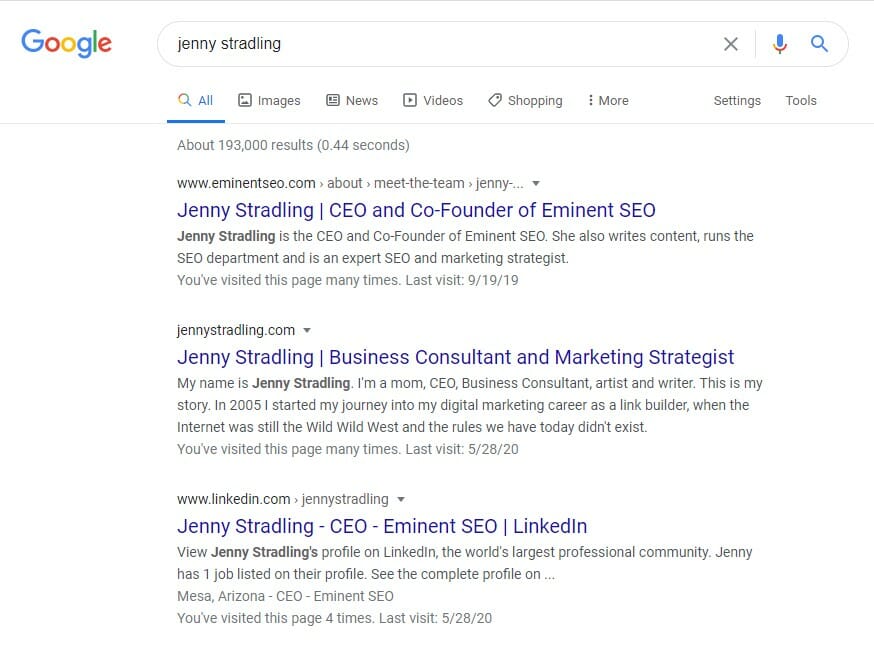
SEO, or Search Engine Optimization, is the practice of improving the volume and quality of traffic to your website through the organic search results.
Example, this is an organic search result from a query in the Google search engine:
Different Types of Search Results
Google serves more than just organic listings. There are actually several types of Google SERP (search engine result page) features. You’re probably used to seeing these common types:
Organic Results
Paid Ads
Featured Snippets
Knowledge Graph
Local Pack
However, the Universal Results contain additional organic types, such as: videos, images, new results and rich snippets.
Common SERP Features
You probably don’t realize that when you search Google you are getting results from one or more of 24+ SERP features. Chances are you aren’t getting all of them at once. However, you might actually see several of these features on one SERP:
Featured Snippets
Local Pack
Reviews
AMP
Site Links
Video
Featured Video
Video Carousel
Top Stories
People Also Ask
Image Pack
Image
Featured Image
Image Carousel
Hotels Pack
Twitter
Instant Answer
Knowledge Panel
Shopping Ads
Adwords Top
Adwords Bottom
Flights
FAQ
Jobs Search
When it comes to SEO, most people will group the SERP’s into two main buckets: organic and paid. SEO’s work on the organic results (including additional Google SERP features) and Paid Ad Managers work on getting results using Google Adwords.
SERP TYPE: Paid Ads
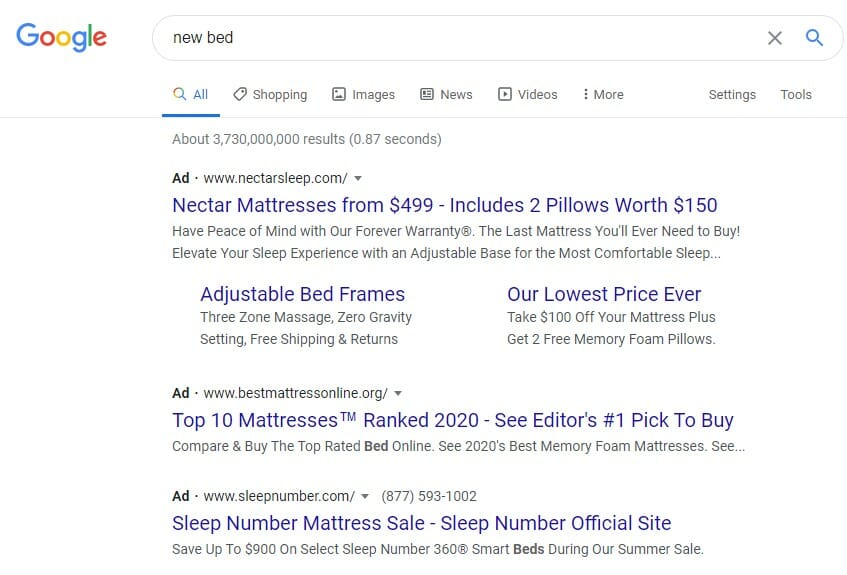
It can be hard to tell the difference, but when a search query contains a paid ad, you’ll see the ads before (and sometimes after) the organic results. Generally called “Google Paid Ads”, you might also hear Google Adwords referred to as Sponsored Listings or PPC (Pay Per Click) Ads.
Google Adwords are displayed when businesses have chosen to pay Google a cost per click to appear before or after the organic listings.
Example of Adwords (top):
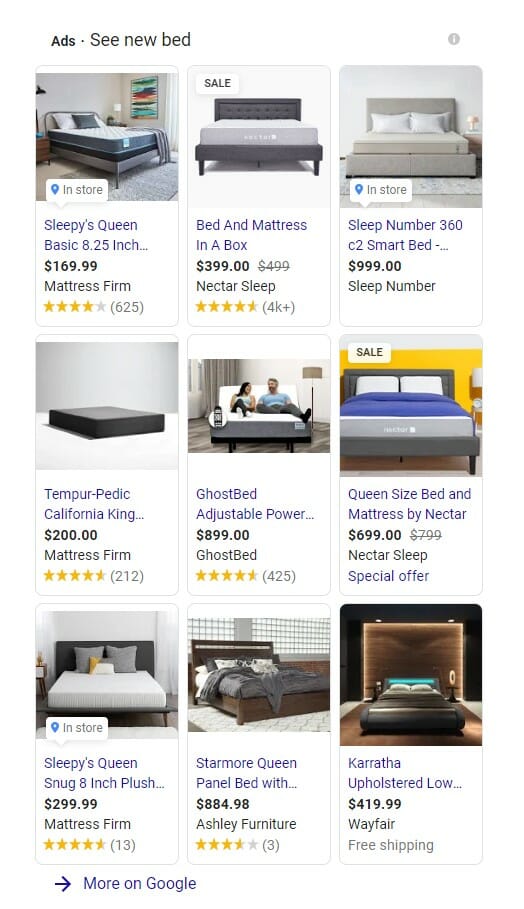
For retail or ecommerce related queries, you might see shopping ads as well. Example:
SERP TYPE: Featured Snippets
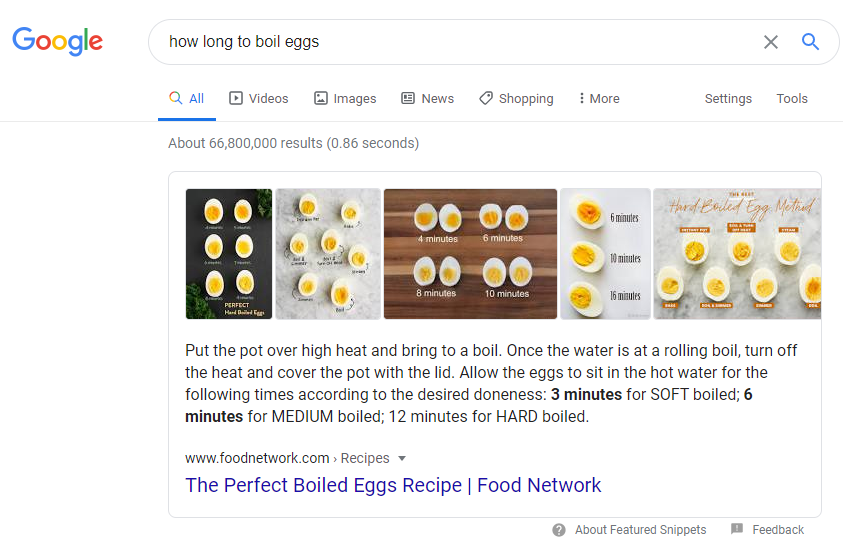
A somewhat new SERP feature (remember, when I say “new” I go back to the dinosaur days of the Google algorithm), featured snippets are rich search results that appear as a box of content. They contain fields of information that offer a quick answer related to a user’s query.
A lot of SEO’s dislike them as the result generally answers a question without the user clicking to the site. This means Google gets the traffic but the website they scraped the result from does not.
However, there have also been experiments where the featured snippet actually helped drive more traffic. I can imagine if the user found the short answer helpful but wanted to learn more, they might click to the page to see an expanded answer. In fact, I found this post by Cyrus Shepard on Moz where he did a test that lead to a loss in traffic.
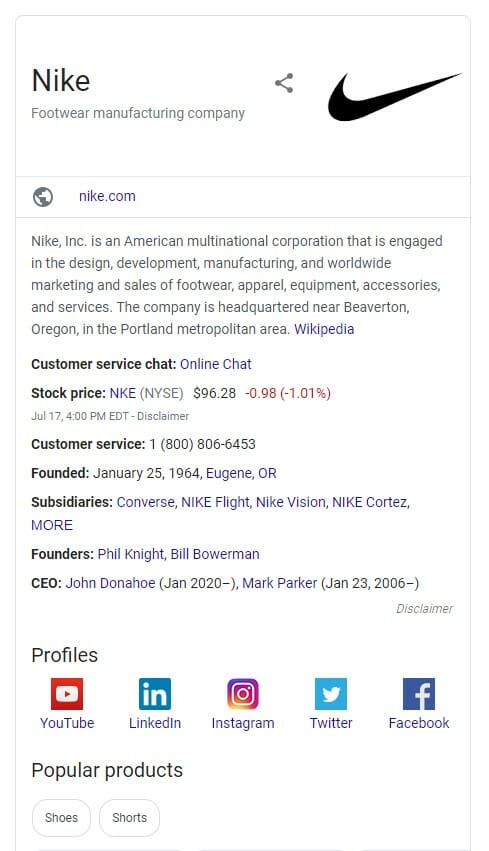
Often appearing as a panel on the right side of the SERP, the Google Knowledge Graph collects and serves a more interactive result. Knowledge panels generally show for queries around the name of a famous person, place, brand or object. Results from the Knowledge Graph are different from the Featured Snippets as the information comes from different sources. Feature Snippets are driven by Google data while the Knowledge Panel content comes from human-edited sources, such as Wikipedia.
Example of the Nike brand Knowledge Panel result:
SERP TYPE: Local Pack
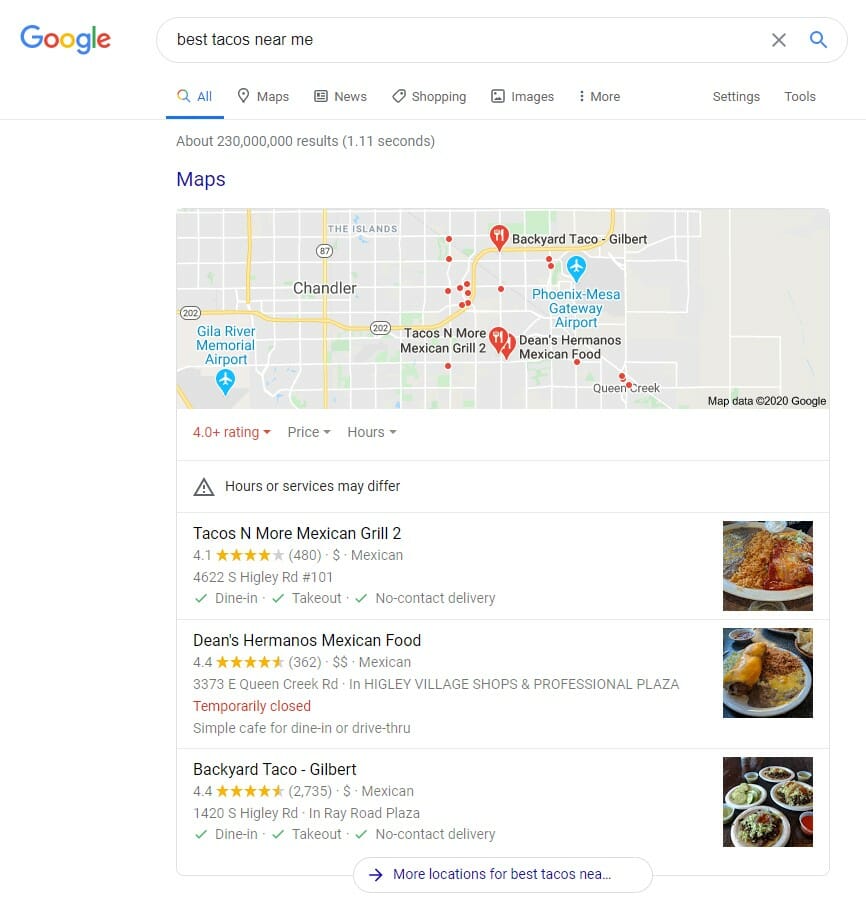
The local results, or Google local pack, generally show when Google has interpreted the search query as local in nature. This can be based on the search term itself but is also impacted by the searches IP address or geographical location and previous search history. The local pack shows a map and the top Google My Business place pages or maps to businesses related to the query.
Example of a local search result:
Effective Paid and Organic Results have Something in Common: Quality Content
Now that you better understand the Google SERPs you can see how many different ways you can optimize your website to get visibility. Each type of search feature runs off of its own algorithm or sub-algos (I just made that second one up). But seriously though. There is one giant or “core” algorithm, however, it’s important to acknowledge there are MANY algorithms and countless formulas at work.
At its core, the Google algorithm is accessing:
The meaning of your query
The relevance of the possible webpages
The quality of the content
The usability of the webpages
The context and settings
When I am speaking with a prospect or someone who might not want to get into all of the technical aspects of SEO, but gain a better understanding of how it works, I generally tell them this:
Google wants to rank the pages or websites with the best information on the subject being searched.
That seems simple enough, right? But it’s determining what “the best” is where it gets complicated.
Google says:
“To give you the most useful information, Search algorithms look at many factors, including the words of your query, relevance and usability of pages, expertise of sources, and your location and settings. The weight applied to each factor varies depending on the nature of your query—for example, the freshness of the content plays a bigger role in answering queries about current news topics than it does about dictionary definitions.”
Clearly, understanding your own website users and creating the best possible experience for them is key. For this you need to also understand how to optimize your website for your buyers, not just Google. This includes UI and UX, landing page optimization, split testing and more.
However, I think it’s safe to say quality information trumps gimmicks and tactics every time. If you have a detailed page of content that anticipates the users’ needs and addresses them in a simple, yet in-depth way, you stand a much better chance of getting results with Google than someone who deploys an overly complicated page that makes it hard for the user (and Google) to find what they are looking for.
In other words, fancy interactive widgets and cute graphic designs might seem great for the user. But if they slow down the load time, make it hard for the visitors to navigate the site or don’t create a path for the user to learn (or do!) more, well, you’re not going to achieve long-term rankings with Google.
Google expects a quality experience and they can measure that by how often a page gets clicked on from the SERPs, how long the user stays on the page, how many other pages they visit and if they come back for more.
Of course, there are off-site variables as well. If your content is great, Google anticipates others will talk about it and link to it. So, they also look at social indicators, how many people cite your brand, as well as how many and what types of sites link to you. Pages that earn a lot of links from authority sites are much more likely to rank than other sites with similar content but less in-bound links.
Do Paid Ad Pages Use the Same Formula Organic Pages Do?
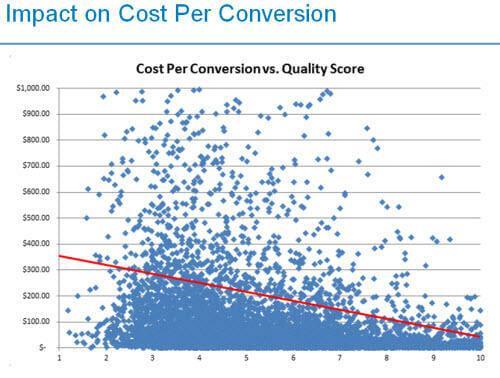
Although paid ads don’t necessarily use the same criteria the organic algorithms do, Google Adwords does use a formula to determine a page Quality Score. And, naturally, it follows a lot of the same metrics used to achieve higher rankings with Google organically (with SEO).
Both consider and assess how users will interact and respond to the information presented to them. Google wants to understand what the search intent is and what pages best answer that query. While the organic search algorithms determine which pages fall where organically in the rankings for that term, Google is also assessing the Quality Scores of the pages bidding on ads in order to make a decision on what ad results get higher placement as well.
Websites with a higher Quality Score with Google get:
Better ad placement
Better click through rates
A lower cost per click
A higher ROI
What Determines a Higher Quality Score?
The Google Quality Score is a rating of the relevancy and quality of the ads, target keywords and landing pages. Your Quality Score depends on several factors:
Target keywords and their relevancy to their associated ad copy
Target website landing pages and their relevancy to the keywords and ads
The overall trust and organic visibility of the website (rank authority)
Your history with Google Ads including click-through rate (CTR) and conversion data
Although these are just some of the variables, how much weight Google gives to each one is hard to measure. That said, as a campaign runs, over time the CTR helps determine the overall quality of the user experience from a paid ad perspective. This is clear as you can see higher ad placement and lower ad costs when the CTR and conversions increase.
Quality Content Helps with SEO and Paid Ad Strategies
I always thought it was strange when someone ran paid ads to custom, non-indexable landing pages and never turned the top performers into organic content for the website. I get having landing pages built strictly for ad campaigns. However, if you are running an ad campaign and getting great conversions from a non-indexable page, why not apply that knowledge to your organic pages as well?
A landing page is just a page. Why can’t it be used for paid AND organic traffic? If Google and the users like the page, you could rank high in the organic results and replace the need for expensive paid ads. Or, at least reduce your paid ad budget. If the users bypass the paid ads and go to the organic listings, you’ll have a chance of getting a click either way.
By leveraging your paid ad landing pages for additional organic indexing with Google you’re maximizing your budget and getting a bigger bang for your buck!
#WINNING!
Get the Most Out of Your Content
No matter what your strategy is, if you’re trying to get results with Google (organic or paid) you need quality content. If you’re running paid ads, consider implementing SEO best practices as a way to increase your organic reach while testing different keywords and ad copy. This way you’ll let the ad spend determine your organic targets, but maximize your investment into content for an even better chance of achieving a residual, long-term ROI.
Now that’s what I call smart marketing!
Quality Content Services
If you have a great brand, business and product / service but no time to write, don’t worry. Our team has decades of experience developing out marketing campaigns and content strategies for hundreds of clients and thousands of pages. We’d love to help you map out a new content plan or simply supplement your existing in-house team. No matter what your copywriting needs are, we’re here to help.
Simply call us at 800.871.4130 to talk to our team about your content needs, or drop us a note and myself or someone from my team will get back to you with our recommendations. From blog articles to ad copy, we’ve got a content team that understands SEO and design that can fulfill orders of any size.
Have a question for me about content or marketing? Feel free to comment and I will personally respond. Until next time, happy writing my friends!
CEO, Business Consultant, Researcher and Marketing Strategist
Jenny Weatherall is the co-owner and CEO of Eminent SEO, a design and marketing agency founded in 2009. She has worked in the industry since 2005, when she fell in love with digital marketing… and her now husband and partner, Chris. Together they have 6 children and 3 granddaughters.
Jenny has a passion for learning and sharing what she learns. She has researched, written and published hundreds of articles on a wide variety of topics, including: SEO, design, marketing, ethics, business management, sustainability, inclusion, behavioral health, wellness and work-life balance.









 High Quality Website Design and Development







![Opting Out of Google Featured Snippets Led to 12% Traffic Loss [SEO Experiment]](https://www.eminentseo.com/wp-content/uploads/2020/07/5e9606eb26e4c5.731029891.jpg)