If your marketing strategy still looks like it did even 6 months ago… we should probably talk.
Because things shifted. Fast.
And not in a “new tool to try” kind of way. More like a “the way people find and choose businesses is changing underneath you” kind of way.
Here’s what we’re seeing right now.
AI isn’t assisting anymore. It’s acting.
Google is going all in on AI agents. Not just tools that help you write or research… but systems that actually do things.
Book. Recommend. Decide. Execute.
That means fewer steps for users. And fewer chances for your brand to show up if you’re not positioned right.
If your funnel relies on multiple clicks, comparisons, and “let me think about it”… that friction is getting removed.
Search is turning into a conversation
People aren’t searching once and clicking anymore.
They’re asking, refining, following up. All in one experience.
And Google is leaning hard into that with AI Overviews and conversational results.
So if your content is built around:
one keyword
one page
one answer
…it’s probably not holding up.
The content that’s working now actually guides the conversation.
There is no “one ranking” anymore
Search results are getting more personalized. Fast.
Different users are seeing different results based on behavior, context, history.
Which means: Your #1 ranking might not be someone else’s #1.
And your reports? They might not be telling the full story anymore.
AI isn’t a test anymore
Last year, everyone was “trying AI.” Now? The companies winning are building it into everything they do. Content. Strategy. Operations. Reporting. The ones still dabbling are starting to fall behind. Quietly, but quickly.
So what actually matters now?
Not more content.
Not more keywords.
Not more tools.
What matters is:
Authority and trust
Real brand signals
Content that actually answers layered intent
Strategy that goes beyond search alone
If your current approach still depends on rankings, traffic, and hoping users click through a 10-step journey… it might be time for a reset.
If you’re starting to see how much this shift changes the game, we broke it down in more detail here:
Eminent SEO provides strategic SEO campaigns with measurable results along with expert website design, development, pay per click, content and social media and organic website marketing. 800.871.4130.
Search and digital marketing continue to evolve quickly. Between AI-driven search experiences, ongoing algorithm adjustments, and changing user behavior, it’s becoming harder to separate real signals from noise.
Each month I like to share a few things that caught my attention. A mix of industry updates and observations from the work we’re doing here at Eminent SEO.
Here are a few insights worth paying attention to this month.
Search Insight
AI Is Changing Informational Search
One of the biggest shifts happening right now is how AI-generated answers are changing informational search.
Instead of sending users to a list of links, AI tools and search engines increasingly summarize answers directly. That means visibility isn’t just about ranking anymore.
Content strategy is evolving from “rank for keywords” to “be the source models reference.”
What this means for marketers:
Authority signals matter more than ever
Brands that publish expert content are more likely to be cited
Mentions and citations across the web influence visibility
CEO, Business Consultant, Researcher and Marketing Strategist
Jenny Weatherall is the co-owner and CEO of Eminent SEO, a design and marketing agency founded in 2009. She has worked in the industry since 2005, when she fell in love with digital marketing… and her now husband and partner, Chris. Together they have 6 children and 3 granddaughters.
Jenny has a passion for learning and sharing what she learns. She has researched, written and published hundreds of articles on a wide variety of topics, including: SEO, design, marketing, ethics, business management, sustainability, inclusion, behavioral health, wellness and work-life balance.
As we roll into 2026, the digital landscape is shifting faster than any of us can refill our coffee…
AI is officially the backbone of modern marketing, video is still the reigning queen, and authenticity is making a comeback in a big way.
If you’re planning your strategy for next year, or still trying to catch up from this one, here’s your quick-hit checklist of what’s actually worth paying attention to.
1. Plug AI into everything (strategically).
We’re past the “Should we use AI?” stage. Now it’s: “Where is AI going to save us time, money, and sanity?” Think content support, campaign optimization, smarter reporting, personalization, and anything repetitive your team secretly hates doing.
2. Prioritize short-form video.
TikTok, Reels, Shorts – these are still driving discovery. Lo-fi is performing better than overproduced. Keep it real, keep it tight, and assume people are watching on mute.
3. Build a truly personalized customer experience.
AI-powered segmentation, interactive tools, better chat experiences… all of it adds up. Your customers want less friction and more “Wow, they actually get me.”
4. Lean into authenticity.
No one trusts perfect anymore. Bring in UGC, micro-influencers, behind-the-scenes content, and honest reviews. Transparency is officially a differentiator.
5. Rethink your SEO for how people search now.
Social search is exploding. Voice search is back. Multimodal search (text, image, voice) is becoming the norm. It’s time for conversational content and platform-native visibility strategies.
6. Treat social commerce like a second storefront.
Your audience is already browsing, discovering, and buying without leaving their apps. Optimize your product feeds, build trust signals, and make the buying path frictionless.
7. Explore immersive content.
AR try-ons, virtual demos, interactive experiences – these aren’t sci-fi anymore. They’re fast becoming conversion tools, especially for eCommerce and education-driven services.
8. Put your sustainability and ethics front and center.
Consumers expect honesty and responsible practices. If your brand has strong values, show them. If you don’t… maybe 2026 is the year to start.
The Big Takeaway:
Winning next year isn’t about doing everything. It’s about doing the right things consistently: embracing AI, committing to authenticity, and showing up where your customers already are.
Brands would need to rethink how they show up online
Twelve months later? Those weren’t “trends,” they became table stakes.
AI is built into every tool.
Social search exploded.
And visibility now depends on how well you combine traditional SEO with conversational, visual, and short-form content.
2026 isn’t about chasing the next shiny object, it’s about maturing your systems so you don’t have to play catch-up again next year.
Current Marketing News
What you need to know in SEO, AI, social, and paid media
Google Begins Rolling Out a New Core Update
Google confirmed a new core update is now live and may take a few weeks to settle. They also added new guidance noting that smaller core updates run continuously throughout the year. This means ranking movement may happen even outside major announcements. If you see changes, wait for the rollout to finish before making decisions. As always, the best long-term response is improving clarity, originality, and overall helpfulness in your content. Read the announcement on LinkedIn
Google Confirms Smaller Core Updates Happen Continuously
CEO, Business Consultant, Researcher and Marketing Strategist
Jenny Weatherall is the co-owner and CEO of Eminent SEO, a design and marketing agency founded in 2009. She has worked in the industry since 2005, when she fell in love with digital marketing… and her now husband and partner, Chris. Together they have 6 children and 3 granddaughters.
Jenny has a passion for learning and sharing what she learns. She has researched, written and published hundreds of articles on a wide variety of topics, including: SEO, design, marketing, ethics, business management, sustainability, inclusion, behavioral health, wellness and work-life balance.
Fresh Strategy, Real Results, and What’s Working Right Now
TL;DR – This Month in Search, Content & Design
AI is changing how people find, choose, and interact with content, but SEO fundamentals still matter
We’re seeing real results from schema enhancements, internal link strategies, and AI-informed audits
Brands planning for 2026 should prioritize topical authority, user experience, and AI visibility
Google continues to push updates quietly, here’s what we’re tracking
A Note from Jenny
We’ve spent the last few months diving deep into AI-powered search, generative content shifts, and how to help our clients stay visible through it all. But visibility is just one part of the picture: what’s actually working?
In this issue, we’re sharing what’s driving results for our clients right now and what to keep your eye on as 2025 winds down.
What’s Actually Working Right Now
Schema Optimization = More Visibility
We’ve been auditing and rebuilding schema on key service and location pages – and yes, we’re seeing bumps in impressions and AI citations. Even when traffic stays flat, better structure = more relevance.
Try This: Audit your top pages for outdated or missing structured data – especially Article, Organization, Service, and FAQ.
Internal Link Strategy Lifts Everything
We’re mapping internal link flows by topic cluster, not just service silo, and seeing better crawling and contextual ranking. Helpful for both traditional SEO and AI systems.
Tip: Don’t just link to sales pages. Link between related educational content to help search engines “understand” your expertise.
What to Prioritize for 2026 Planning
AI-readiness audits: Optimize for citations, clarity, and semantic depth
Content refreshes: Update older high-value posts to align with new ranking systems
UX upgrades: Faster, cleaner pages with clear CTAs are converting better than ever
Brand positioning: Authority and reputation signals are only growing in importance – make your About page shine
From the Studio: Smart Design That Performs
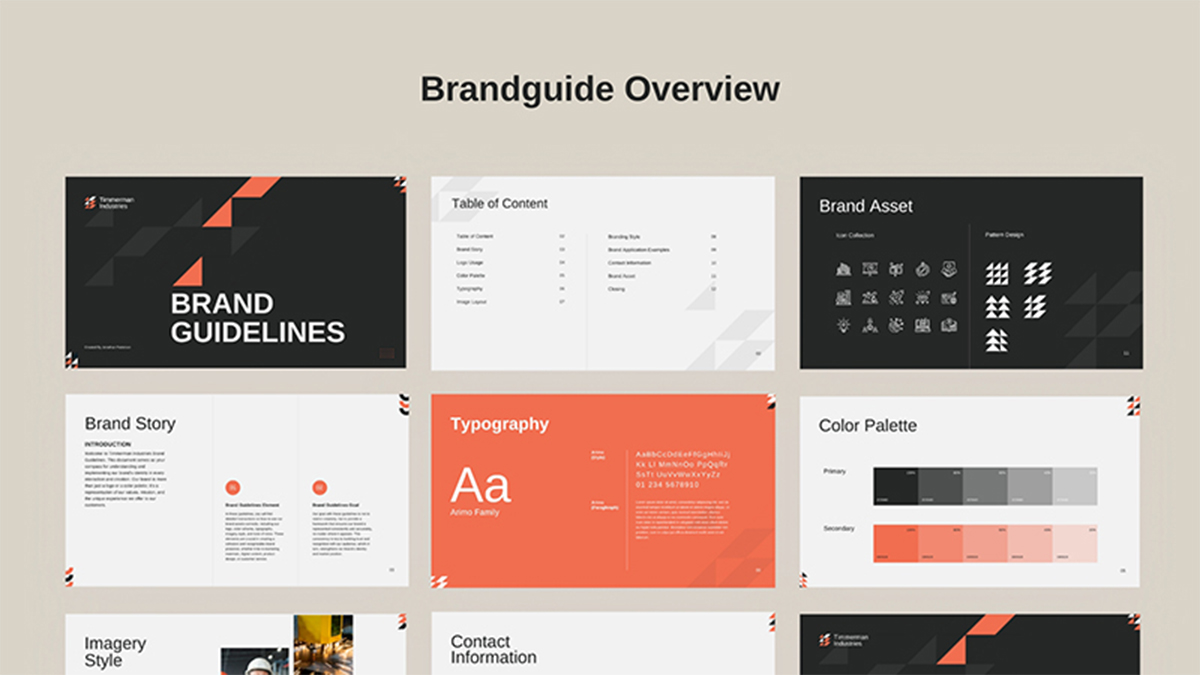
Our creative team has been rolling out modular brand systems for clients – think reusable visual templates, flexible layouts, and scalable design kits. These systems make content creation faster and more consistent across platforms.
If your brand visuals feel all over the place, we can help clean things up and scale your look.
1. Is AI Search SEO Leaving Bigger Opportunities Behind?
Many marketers are hyper-focused on GEO and AI answers, but this article challenges us to ask: are we ignoring higher-ROI channels like YouTube, video, or even local? Read it on Search Engine Journal
2. Measuring GEO: What’s Trackable Now and What’s Still Missing
This one breaks down what we can and can’t track in Google’s AI-powered results. Spoiler: impressions and referrals are still fuzzy. Read the GEO metrics article
3. AI Systems Prefer AI-Written Content, Study Finds
Yes, seriously. A new study shows AI ranking systems sometimes favor content generated by AI tools over human-written posts. Read the coverage
4. Google Search News: Structured Data Pullback & What It Means
Google is discontinuing reporting in Google Search Console for six deprecated structured data types including: Course Info, Claim Review, Estimated Salary, Learning Video, Special Announcement, and Vehicle Listing. Read more at Search Engine Land
Quote of the Month:
Search is changing fast, but not in one direction.
Jenny Weatherall
Final Word
Search is changing fast, but not in one direction. As AI reshapes the interface, content clarity, experience, and trust are still your best bet.
If you’re unsure where to focus next, we’re here to help you cut through the noise and find what really moves the needle.
Eminent SEO provides strategic SEO campaigns with measurable results along with expert website design, development, pay per click, content and social media and organic website marketing. 800.871.4130.
Sixteen years. That’s wild to even say out loud. When we started Eminent SEO back in 2009, it was just a few friends, a Hotmail account, an Excel sheet, and a lot of grit (and caffeine). No office, no funding, no fancy tech – just a belief that we could build something real. Something better.
A lot has changed since then. We’ve gone from late nights building links to developing brand portfolios, content systems, creative campaigns, and ROI-driven marketing strategies. We’ve seen platforms rise and fall, algorithms rewrite themselves, and the digital world reinvent how business works more times than we can count.
But through it all, the core stayed the same: good people doing great work.
16 Lessons from 16 Years in Business
Sixteen years in business means a lot of coffee, a lot of Google updates, and a lot of learning. Some lessons came easy. Others… not so much.
But every one of them helped shape who we are: as people, as marketers, and as a team.
Here are a just few of the things we’ve learned along the way:
Heading into our 17th year, our focus is simple: keep creating work we’re proud of, keep helping our clients grow, and keep building a company that cares about people as much as performance.
To our clients, team, and friends who’ve been part of this wild ride: thank you! You’re the reason we get to do what we love every day.
Sixteen years down, and it’s only up from here!
AI, SEO & LLMs: The Future of Search
Large language models like ChatGPT and Gemini are changing how people search and consume information.
It’s not about ranking for keywords anymore – it’s about showing up in the AI-generated answers.
That means adopting AEO (Answer Engine Optimization) and GEO (Generative Engine Optimization) so content is structured, machine-readable, and ready for AI to pull in.
“We’ve been through so many changes, but one thing that never changes is that it’s all about the people. You can have great players, but if they can’t play together, you’re not going to make it.”
Jenny Weatherall
Featured Service
AI Marketing & SEO Optimization (GEO)
We help brands stay visible in AI-driven search by optimizing for Google AI Overviews, ChatGPT, Gemini, and more. Our Generative Engine Optimization approach blends AI tools with human expertise to structure, personalize, and future-proof content – so it’s ready to appear in both traditional search results and AI-generated answers.
Eminent SEO provides strategic SEO campaigns with measurable results along with expert website design, development, pay per click, content and social media and organic website marketing. 800.871.4130.
Google’s AI Mode may become the default, but Google says not just yet.
Welcome to GEO (Generative Engine Optimization) – a new way to optimize for visibility in AI-generated answers. What is GEO?
GEO performance is hard to measure – we explain what shows up, what doesn’t, and what to do about it. Measuring GEO
We break down what you can measure, what you can’t, and how to optimize anyway.
AI continues to reshape the way we think about content, search, and visibility – but it’s not always clear what’s signal and what’s noise.
Last week’s back-and-forth from Google about AI Mode becoming the default search experience sent SEOs into overdrive. Some insiders say it’s “coming soon.” Others say, “don’t read too much into that.” Either way, one thing is certain:
AI-powered search is here, and we need to be optimizing for it now, not later.
AI Mode May Become the Default Search Experience (Or… Maybe Not Just Yet)
Google’s AI Mode is now live at google.com/ai, offering AI-powered answers, comparisons, and follow-up questions in a cleaner, more “conversational” interface.
Yes, Logan Kilpatrick (Google PM) said it would become the default “soon,” but VP Robby Stein clarified not to read too much into that. So for now, AI Mode is opt-in – but growing fast.
As it spreads, it’s bringing a new challenge: How do you measure visibility and impact when clicks disappear and citations replace rankings?
GEO: What We Can and Can’t Track (Yet)
Generative Engine Optimization (GEO) is the emerging practice of optimizing content to show up in AI-generated responses – whether in Google AI Overviews, ChatGPT, Perplexity, or Gemini.
But here’s the kicker: visibility doesn’t mean traffic, and performance data is murky at best.
What’s trackable right now:
AI mentions and citation rate: Tools are emerging to track when your brand is cited in generative answers. High citation = the new “Position 1.”
Referral traffic from generative engines: Some platforms link back to your site. You can segment this traffic, though it’s messy.
Share of voice in AI answers: How often your brand shows up in response to core queries.
Content prominence: Where you appear in the AI response (first bullet? buried in a footnote?).
What’s still missing:
Prompt volume: Unlike keyword search, generative engines don’t show how many people ask about your topic.
Why a citation happened: You might know you were cited, but not what triggered it.
Attribution blending: When multiple sources are synthesized, you don’t know how much credit your content gets.
The visibility you gain may not show up in GA or GSC, but that doesn’t mean it’s not influencing behavior.
“Act as a generative engine. Here’s my article. Would you cite it in response to this question? Why or why not?”
Tool to Watch:
We’re testing new AI SEO tools that track brand mentions in AI responses across ChatGPT, Perplexity, and Google AI. Hit us up if you want our shortlist.
Final Word
GEO isn’t about chasing rankings, it’s about earning trust from machines. That means clarity, consistency, and credibility are your most important assets. The next wave of SEO success belongs to brands who can show up, even when there’s no click.
The SEO Strategy Reset
The old tactics - keyword stuffing, chasing backlinks, and posting for posting’s sake - no longer deliver real results. With AI answering users directly in search, content without original insight and value simply won’t be seen.
What’s working now:
focused content clusters, experience-driven perspectives, structured data, lightning-fast mobile performance, and building true user trust over vanity metrics.
Large language models like ChatGPT and Gemini are changing how people search and consume information. It’s not about ranking for keywords anymore - it’s about showing up in the AI-generated answers.
That means adopting AEO (Answer Engine Optimization) and GEO (Generative Engine Optimization) so content is structured, machine-readable, and ready for AI to pull in.
We’re rethinking how content is created - clear question-and-answer formats, robust schema markup, and entity-based optimization so AI systems can easily understand and recommend it.
I’m also leveraging AI tools to audit and refine content, making sure it stays competitive even in zero-click environments.
When someone on X (formerly Twitter) said AI Mode should be the default, a Google Product Manager for AI, simply replied:
“soon :)”
Logan Kilpatrick
Featured Service
AI Marketing & SEO Optimization (GEO)
We help brands stay visible in AI-driven search by optimizing for Google AI Overviews, ChatGPT, Gemini, and more. Our Generative Engine Optimization approach blends AI tools with human expertise to structure, personalize, and future-proof content - so it’s ready to appear in both traditional search results and AI-generated answers.
Eminent SEO provides strategic SEO campaigns with measurable results along with expert website design, development, pay per click, content and social media and organic website marketing. 800.871.4130.
The AI Takeover: What It Means for Your SEO, Strategy, and Search Visibility
Hi There!
I’ve been digging deep into where search is headed – reading, researching, and testing – and one thing is clear: the SEO playbook we’ve all relied on has changed dramatically.
I recently pulled together three articles on our blog that explore what’s happening. Here’s the condensed takeaway:
The SEO Strategy Reset
The old tactics – keyword stuffing, chasing backlinks, and posting for posting’s sake – no longer deliver real results. With AI answering users directly in search, content without original insight and value simply won’t be seen.
What’s working now:
focused content clusters, experience-driven perspectives, structured data, lightning-fast mobile performance, and building true user trust over vanity metrics.
Large language models like ChatGPT and Gemini are changing how people search and consume information. It’s not about ranking for keywords anymore – it’s about showing up in the AI-generated answers.
That means adopting AEO (Answer Engine Optimization) and GEO (Generative Engine Optimization) so content is structured, machine-readable, and ready for AI to pull in.
We’re rethinking how content is created – clear question-and-answer formats, robust schema markup, and entity-based optimization so AI systems can easily understand and recommend it.
I’m also leveraging AI tools to audit and refine content, making sure it stays competitive even in zero-click environments.
Bottom line: SEO hasn’t disappeared – it’s evolved. Now it’s about depth, structure, authority, and AI-readiness. The agencies that adapt early will lead the way for their clients in this new search landscape.
If you’re curious about the full articles or want to share your own thoughts, just hit reply – I’d love to compare notes.
Here’s to building the next era of search,
Jenny Weatherall, CEO
Eminent SEO
Quote of the Month:
“We’re not on version 2.0 anymore, we’re at SEO 25.0”
Chris Beckley
Featured Service
AI Marketing & SEO Optimization (GEO)
We help brands stay visible in AI-driven search by optimizing for Google AI Overviews, ChatGPT, Gemini, and more. Our Generative Engine Optimization approach blends AI tools with human expertise to structure, personalize, and future-proof content – so it’s ready to appear in both traditional search results and AI-generated answers.
Eminent SEO provides strategic SEO campaigns with measurable results along with expert website design, development, pay per click, content and social media and organic website marketing. 800.871.4130.
There’s a lot of noise out there about AI and what it means for marketing. Some people think it’s going to replace everything. Others are completely overwhelmed and don’t know where to start. The truth is, AI isn’t here to replace smart strategy or human creativity, but it is changing the game.
From tools like ChatGPT and Jasper to Google’s new Search Generative Experience, the way people search, interact with content, and make buying decisions is shifting. And fast.
As a marketer and SEO who’s been doing this for over 20 years, I’ve seen a lot of trends come and go. But AI is different. This is a foundational shift. If you want your brand to stay visible and competitive, now is the time to understand what AI-powered marketing really looks like and how to use it the right way.
What Is AI Marketing?
AI marketing is one of those terms that gets thrown around a lot, and like most buzzwords, it can mean a dozen different things depending on who’s using it. But here’s the bottom line: it’s about using artificial intelligence to streamline and scale your marketing efforts in a smarter, more personalized way.
This isn’t just automation. It’s not “set it and forget it” email flows. We’re talking about tools that can analyze behavior, predict outcomes, generate content, and make recommendations, all in real time. From writing ad copy and email sequences to segmenting audiences or testing subject lines, AI is helping marketers do more with less effort, and with better results.
That said, AI is only as good as the strategy behind it. If you’re relying on it without understanding your audience, your goals, or your funnel, it’s not going to magically fix anything. But in the hands of someone who knows how to build campaigns that convert? It’s a game changer.
What Is AI SEO?
Then vs. Now: SEO Strategy Comparison Chart
SEO Element
Traditional SEO
AI SEO Today
Keyword Research
Manual, spreadsheet-heavy
Predictive, tool-assisted
Content Creation
Human-written, slow
AI-assisted, human-refined
Ranking Goals
Blue link in SERPs
Cited in AI results, featured
Structure
Keyword-centric
Semantic, structured, intent-driven
Tools
Google tools, SEMrush
ChatGPT, Surfer, Perplexity, Gemini
Let’s be clear: AI isn’t replacing SEO, it’s reshaping how we do it.
AI SEO is about using smart tools and machine learning to help us do the heavy lifting. Instead of spending hours manually analyzing search results or building keyword lists from scratch, we can now lean on platforms like Surfer SEO, Clearscope, and ChatGPT to identify opportunities faster and with more precision.
That doesn’t mean you should let a bot write your content or define your strategy. What it does mean is that AI can assist with research, structure, optimization, and trend forecasting – and when paired with human insight and experience, it becomes a powerful tool.
It’s not magic. It’s not a shortcut. But it is the future of how we scale smarter, especially in a search landscape that’s changing faster than ever.
Understanding Large Language Models (LLMs)
If you’ve used ChatGPT, Gemini, or Claude, you’ve already interacted with a large language model, whether you knew it or not. These models are the engine behind most of the AI tools you see today. They’re trained on massive amounts of text and data so they can understand, generate, and respond to human language in ways that feel surprisingly natural.
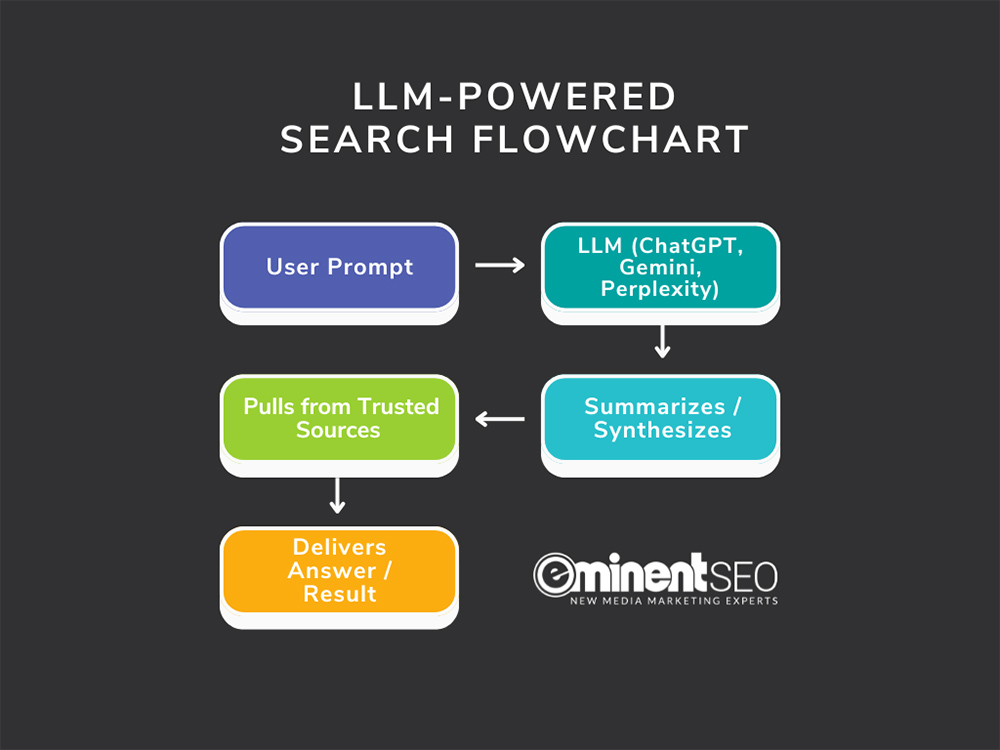
In practical terms, LLMs are what power AI-generated answers in tools like Google’s SGE, ChatGPT, and Perplexity. Instead of just pulling up links like a traditional search engine, these platforms summarize, explain, and deliver responses based on what they’ve “learned” from billions of data points.
For marketers and SEOs, this changes everything. If your content isn’t structured in a way that’s clear, trustworthy, and easy for AI to interpret, you could get skipped in favor of someone who has optimized for this new format. That’s why things like semantic relevance, structured data, and credible sourcing matter more than ever.
We’re not just optimizing for Google anymore. We’re optimizing for the way AI reads, understands, and serves content across platforms.
LLM-Powered Search Is Changing How People Find You
We’re not just seeing new platforms emerge, we’re watching the way people interact with search evolve right in front of us.
Instead of typing a few keywords into Google and sifting through results, users are asking full questions, giving instructions, and expecting instant, summarized answers. Whether it’s “write a quick pros and cons list” or “summarize this article,” AI tools are making micro-searches a part of everyday workflows.
That shift is especially true for younger users. Gen Z and Gen Alpha are growing up with AI built into their phones, browsers, and school tools. They don’t think about “search” the way older generations did. They just ask, and AI responds – instantly and conversationally.
For marketers, this means visibility isn’t just about ranking on page one anymore. You also need to consider how your content shows up in AI-driven answers on platforms like ChatGPT, Perplexity, Gemini, and even TikTok. That includes everything from how well your content is structured to whether it’s being referenced as a trusted source.
This is where generative engine optimization, or GEO, starts to matter. We’ll get into that next, but the key takeaway is this: the rules of visibility are changing. And the brands that adapt will have a serious advantage.
There’s no shortage of buzzwords in the AI space. Some are helpful. Some are hype. Here’s a breakdown of the most common terms you’ll hear, and what they actually mean in a real-world marketing context.
Term
Meaning / Use Case
Notes
AI-Powered SEO
AI tools assist in SEO tasks
Most common industry term
Programmatic SEO
Automated large-scale content generation
Good for location/service pages
Generative SEO
SEO using AI-generated content
Often overlaps with LLM use
GEO (Generative Engine Optimization)
Optimizing for AI-generated answers
Still emerging, high interest
SGE SEO
Optimizing for Google’s Search Generative Experience
Becoming critical for visibility
AI Content Marketing
AI use across blog, email, ads
Broader than SEO alone
AIO (AI Optimization)
Optimizing specifically for AI tools like ChatGPT
Niche, rising
AI-Powered SEO / AI-Driven SEO
These are the most widely accepted terms. They refer to using artificial intelligence tools to assist with keyword research, content optimization, SERP analysis, and on-page structure. Tools like SurferSEO, Clearscope, and MarketMuse fall into this category.
Programmatic SEO
This involves using automation to create large volumes of SEO-optimized content. Think location-based pages, product variations, or service bundles that follow a template. Often used by enterprise sites, but gaining traction as AI tools make content generation more scalable.
Generative SEO
A newer term focused on AI-generated content and how it performs in search. This is tied closely to tools like ChatGPT and Jasper. The key is making sure content is structured, human-reviewed, and strategically aligned, not just auto-generated to fill space.
AI Content Marketing
A broader umbrella that includes AI-assisted writing for blogs, emails, social posts, ad copy, and more. It’s not just about SEO, but about supporting the entire customer journey through AI-enhanced content.
Search Engine AI / SGE SEO
Refers to optimizing for AI-generated search results, like Google’s Search Generative Experience. It’s still evolving, but the focus is on being cited, summarized, or sourced in AI-driven answers rather than just being listed in blue links.
AI-First Marketing
This describes a full-stack approach where AI tools are used at every stage – research, strategy, content creation, targeting, and performance tracking. It’s becoming more common for brands that want to scale quickly without growing their team too fast.
Other AI Marketing Buzzwords You Might Hear
AutoSEO: Used by some tools that promise one-click SEO fixes. These usually oversimplify complex tasks.
Neural SEO: A flashy term with no consistent definition. Use with caution.
AIO (AI Optimization): Refers to optimizing content specifically for AI engines like ChatGPT and Gemini.
GEO (Generative Engine Optimization): The practice of structuring and writing content so it gets picked up by AI-driven search tools.
What Should Businesses Do About All This?
First, don’t panic. You don’t need to overhaul your entire strategy overnight. But you do need to start looking at your content, your SEO, and your marketing through a new lens.
If your brand relies on visibility, you need to think beyond traditional rankings. It’s not just about being on page one of Google anymore. It’s about being referenced, summarized, or suggested by AI tools that are becoming the new layer of search.
Start by reviewing how your site is structured. Is your content clear, well-organized, and easy for machines to understand? Are you using schema markup? Are you answering real questions people ask, not just stuffing keywords into paragraphs?
From there, look at where AI can help you move faster or smarter. Use tools to speed up research, test ideas, generate outlines, or repurpose content across channels. But always pair those tools with strategy and human review.
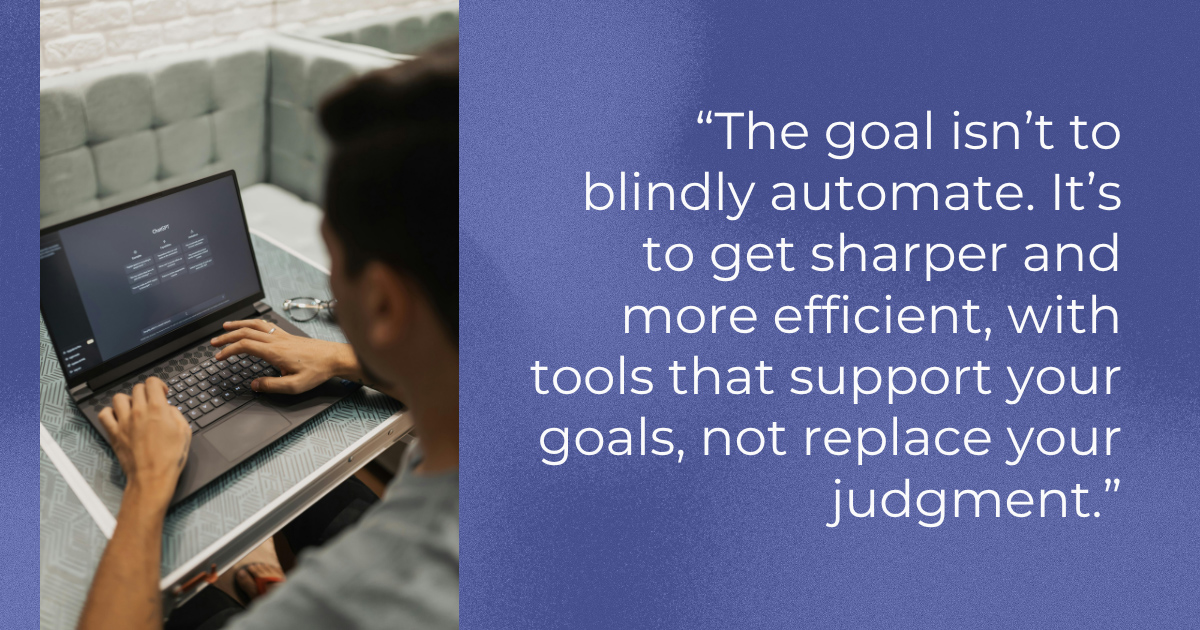
This is not the time to blindly automate. It’s the time to get sharper and more efficient – with tools that support your goals, not replace your judgment.
If you’re looking for a smart, strategic approach to AI-powered optimization, check out our AI SEO & Marketing services to see how we’re helping brands adapt and scale.
And if you want to see where all of this is headed, don’t miss our latest insights on Marketing for 2025 – it’s a roadmap for brands preparing for what’s next in search, content, and user behavior.
How to Optimize for ChatGPT, Perplexity, and Google SGE
If you want your brand to show up in AI-powered search results, you need to think differently about how your content is created, structured, and presented. These platforms are not just crawling pages and matching keywords – they’re analyzing context, credibility, and clarity.
Here’s what actually helps:
1. Be Clear, Not Clever
LLMs like ChatGPT pull from well-structured, easy-to-understand content. That means plain language, strong headings, and direct answers. This isn’t the place for jargon or long-winded intros.
2. Answer Questions Directly
Think about the kinds of prompts users type into AI tools. Things like “What is programmatic SEO?” or “How do I improve local visibility?” Create content that answers those types of questions clearly and concisely.
3. Use Schema Markup
Structured data helps AI tools interpret your content with more confidence. It’s one of the best ways to support featured snippets, rich results, and inclusion in SGE-style summaries.
4. Prioritize Source Quality
If you want AI tools to cite you, your content needs to be trustworthy. That includes referencing credible sources, using original insights or data when possible, and building domain authority over time.
5. Update and Maintain Evergreen Content
AI tools are less likely to pull from outdated or stale content. Regularly refresh your top-performing pieces and make sure your information reflects current trends and standards.
6. Think Platform by Platform
ChatGPT and Gemini are trained differently than Google SGE or Perplexity. While you can’t “optimize” for them the way you do for a traditional search engine, you can create content that increases your odds of being included across all of them – clean, useful, well-cited, and genuinely helpful.
Final Thoughts: AI Isn’t Replacing SEO, It’s Redefining It
AI is already changing how people search, what they expect from content, and which brands show up first. This shift isn’t coming, it’s already here. And the businesses that adapt early are going to have a serious edge.
But let’s be honest. This isn’t about chasing shiny tools or jumping on every trend. It’s about making smart decisions. The brands that will win are the ones who combine real strategy with the right AI support. Not shortcuts. Not fluff. Just sharper execution and better use of time and resources.
If you’re thinking bigger – not just about your SEO, but your entire approach – we also cover what this shift means in It’s Time for a Digital Marketing Reset. It’s a broader look at how marketing is changing and why now is the time to rethink the way your brand shows up.
If you’re not sure where to start, that’s okay. Start with a conversation. Get an audit. Ask the right questions. We’re already helping clients figure out how to make sense of AI in a way that’s strategic, ethical, and actually useful.
Want to know how your brand shows up in AI-generated results?
CEO, Business Consultant, Researcher and Marketing Strategist
Jenny Weatherall is the co-owner and CEO of Eminent SEO, a design and marketing agency founded in 2009. She has worked in the industry since 2005, when she fell in love with digital marketing… and her now husband and partner, Chris. Together they have 6 children and 3 granddaughters.
Jenny has a passion for learning and sharing what she learns. She has researched, written and published hundreds of articles on a wide variety of topics, including: SEO, design, marketing, ethics, business management, sustainability, inclusion, behavioral health, wellness and work-life balance.
I’ve been doing SEO and digital marketing for over 20 years now, long enough to know when we’re facing a major shift, not just another algorithm tweak.
And right now?
We’re in it.
Clients are asking why rankings are dropping. Traffic is slowing down. Conversions are getting weird. Social media’s reach is tanking unless you’re willing to pay for every view. Google’s rolling out AI answers that steal clicks. And most of what used to work… just doesn’t anymore.
It’s not just noise, it’s a real shift.
So we’re hitting the reset button.
This post isn’t about panic. It’s about clarity.
Here’s what’s changed, what’s still working, and what we’re doing next – for ourselves, our clients, and the future of digital marketing.
What’s Changed in SEO (And Why It Matters)
It used to be simple: optimize your site, write blog posts with keywords, build some links, and you’d see rankings and traffic go up. That game is over.
Google has changed the rules. AI is writing the answers now. Search results are packed with featured snippets, AI summaries, maps, videos, and everything except your actual website link. Even paid ads are getting pushed further down the page. And if your site isn’t helpful, fast, mobile-friendly, and trustworthy, it might as well be invisible.
Search behavior has changed, too. People don’t just “Google and click” like they used to. They ask natural, conversational questions. They skim. They scroll. They bounce if the page feels off. And they expect answers immediately.
If your content doesn’t feel human, helpful, or experienced – it’s out.
That’s why the old strategy of publishing blog after blog with recycled tips or keyword-stuffed titles doesn’t just fall flat. It can actively hurt your brand.
So what do we do?
We stop chasing the algorithm.
We start focusing on what actually works in this environment: real value, real people, and content that’s built to last.
Why Everything Needs an Audit Right Now
“The SEO Rules Have Changed”
Old Way
→
2025+ Reality
Keyword-stuffed blogs
→
Helpful, original content
Being listed
→
Being trusted
Title tag tweaks
→
Full-page + entity optimization
Social = vanity
→
Social = authority signal
Google = main source
→
AI = cross-channel signal integration
It’s tempting to keep doing what’s always worked: updating blogs, posting on social, tweaking title tags, running ads… but here’s the truth:
The rules have changed.
What Google values now is different.
What users want is different. And what drives results? That’s evolving, fast.
So before you spend another dollar or write another post, it’s time to take a hard look at your digital presence. Not just the surface stuff, but the whole ecosystem – site, search, content, ads, social, email, reviews, video, tracking, the works.
Because here’s what matters now (and what doesn’t):
What Actually Matters in Digital Marketing Now
Let’s be honest. Most of the marketing “advice” floating around right now is outdated or straight-up useless. If you’re still trying to game the algorithm with keyword stuffing, AI-written fluff, or publishing just to stay on schedule, you’re wasting time.
Here’s what’s really working in 2025:
1. Content With Real Experience and Insight
Not blog spam. Not another listicle. Google wants to know: Do you actually know what you’re talking about? Firsthand experience and subject matter expertise are what set you apart. It’s not just about writing more, it’s about writing what only you can say.
2. Topical Depth and Structure
Gone are the days of one-off keyword blogs. You need content clusters: tightly connected, internally linked pages that build topical authority. If Google can’t see how everything fits together, it won’t see you as the expert.
3. Schema and Structured Data
If you’re not using schema markup, you’re missing out. It’s how search engines (and AI tools) understand your content. Want to show up in AI-generated results? Want your FAQs, videos, or articles to be featured? Mark your content up.
4. Strong UX and Mobile Performance
Fast-loading pages, clean navigation, mobile-first design: all non-negotiable. If your site feels outdated or clunky, users bounce and Google notices. And no, you don’t get points for “trying.”
5. Real Value to the User
Google is looking at whether people are actually engaging with your site. Are they staying on the page? Are they clicking through to other content? Are they filling out a form or watching a video? If not, you don’t just lose rankings, you lose trust.
What Needs To Be Phased Out
Not everything that used to work is worth saving. Some of it needs to go quietly. Other things need to be buried and never spoken of again.
Here’s what we’re actively leaving behind:
1. Keyword Stuffing and Shallow SEO Tactics
You know the ones, awkward phrases shoved into every paragraph just to “hit the keyword.” Google’s smarter than that now, and your readers always were. If it doesn’t sound natural, it’s not helping.
2. Thin, Generic Content
If your content could be written by ChatGPT or found on 10 other sites, it’s not doing anything for your brand. “What is divorce?” doesn’t cut it anymore. Real-world insight wins. Generic filler gets ignored.
3. Publishing Just to Publish
Blogging three times a week won’t save you if none of it says anything meaningful. More isn’t better, better is better. One strong piece of content that connects, converts, or ranks beats 10 that do nothing.
4. Low-Quality Link Building
No more spammy directory links, comment sections, or link wheels. That stuff doesn’t just fail, it can actually hurt you now. We’re focused on earned links through authority, relevance, and relationships.
5. Overextending on Platforms That Don’t Perform
Just because a platform exists doesn’t mean you need to be on it. If your ideal client isn’t on Pinterest, don’t waste energy there. We’re focusing on channels that bring in real results, not just noise.
6. Ignoring the Funnel
Driving traffic to your homepage and hoping for the best? Not anymore. If there’s no clear next step, no lead magnet, no conversion path – that traffic is going to bounce. We’re done wasting opportunities.
It’s SEO 25.0: AI Has Changed the Game
I’ve been doing SEO long enough to remember when keyword stuffing actually worked. When backlinks from spammy directories helped. When you could outrank your competitors just by having more blog posts.
That version of SEO is dead.
As my colleague, Chris Beckley, said: “We’re not on version 2.0 anymore, we’re at SEO 25.0”.
The algorithm doesn’t just index pages, it understands them. It reads context. It looks for intent. And more importantly, it’s being replaced in many cases by AI-generated answers that don’t even give users a reason to click through to your site.
This isn’t just a trend, it’s a whole new way of being found (or not being found at all).
What AI Search Means for Your Business:
Your content may be read by AI, but not clicked
Your site has to be so trustworthy and structured that Google’s AI wants to cite it
Keyword rankings alone are no longer a clear indicator of success
The focus now is authority, context, and user satisfaction
The new rules reward depth, not volume, and quality, not tricks.
What We’re Doing About It:
We’re building content to earn citations, not just rankings.
We’re using schema to make content readable to both humans and machines.
We’re helping clients become sources, not just search results.
And we’re teaching teams how to create content that connects, with both people and AI.
AI Is Reshaping Local SEO, Too
If you’re thinking, “Well, I don’t care about blog traffic, I just need local leads,” – heads up: AI is coming for local search too.
In fact, according to Search Engine Land, AI-driven local results are changing the game in three big ways:
1. Local packs are shrinking
AI-generated results (like Google’s Search Generative Experience) are starting to replace or compress the traditional map listings. That means fewer businesses get visibility, and if you’re not in the top 1–2, you’re basically invisible.
TL;DR: It’s no longer enough to just be “listed.” You need to be trusted.
2. Reviews and reputation now shape AI answers
AI tools are pulling language from your reviews and site to decide whether you’re credible and relevant. This means what people say about you, and how often, matters more than ever.
Action item: We’re leaning hard into review strategies, location content, and schema to make sure you show up.
3. Generic local content doesn’t cut it
AI is ignoring city-stuffed landing pages with nothing helpful or unique. If your location pages look like clones of each other with just the city swapped, they won’t get featured, ranked, or clicked.
Now’s the time to rewrite your location pages with real content, real value, and real local signals.
Why This Matters:
Your Google Business Profile, your reviews, and your local landing pages all now feed into how you show up in AI search, or don’t.
So if you’re relying on walk-ins, maps visibility, or “just being found in the area,” you need a serious local content and optimization strategy, not just a listing and a phone number.
The New Local SEO Funnel Looks a Lot Different
AI didn’t just tweak how people find local businesses, it flipped the funnel.
What used to be a straight path from a map to your website is now a dynamic journey shaped by AI, real-time data, reviews, and content relevance.
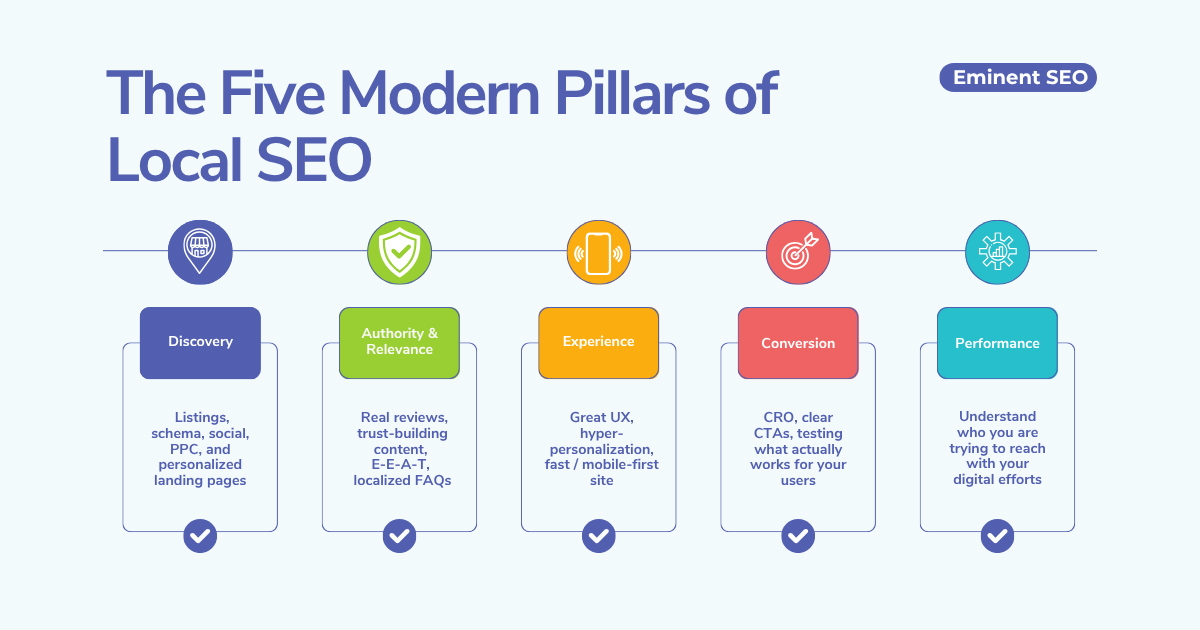
The Five Modern Pillars of Local SEO
Here’s a simplified framework we use at Eminent SEO to help clients compete in today’s evolving search landscape:
Discovery – Listings, schema, social, PPC, and personalized landing pages
Experience – Great UX, hyper-personalization, fast/mobile-first site
Conversion – CRO, clear CTAs, testing what actually works for your users
Performance – Use data across channels, not just from Google Analytics, to refine and optimize
At every stage – discovery, trust, experience, conversion, and performance – AI is influencing what shows up and who gets chosen. Your listings, your content, and even your customer feedback all feed into the algorithm.
If you haven’t rethought your local strategy through this lens, now’s the time.
It’s Time for an SEO Reset
SEO isn’t dead, it’s just evolved again. And honestly, we’ve been here before. Remember Panda? Penguin? BERT? Now it’s SGE, EEAT, and AI-assisted everything.
But here’s the truth: Google still wants what users want.
And that’s:
Real expertise.
Fast, user-friendly experiences.
Content that actually answers questions, not just ranks for keywords.
Businesses that earn attention, not just chase algorithms.
If you’re still chasing outdated tactics like thin blog posts, spammy backlinks, or keyword-stuffed pages, you’re playing checkers on a 3D chessboard.
It’s time for a reset.
We’re helping our clients audit what they have, cut what’s not working, and rebuild smarter systems based on what search (and people) actually value now. That means fewer shortcuts, more substance. Less noise, more signal.
Need help navigating the shift?
We offer full audits and custom strategies designed for where digital is going, not where it’s been. Reach out and let’s talk.
CEO, Business Consultant, Researcher and Marketing Strategist
Jenny Weatherall is the co-owner and CEO of Eminent SEO, a design and marketing agency founded in 2009. She has worked in the industry since 2005, when she fell in love with digital marketing… and her now husband and partner, Chris. Together they have 6 children and 3 granddaughters.
Jenny has a passion for learning and sharing what she learns. She has researched, written and published hundreds of articles on a wide variety of topics, including: SEO, design, marketing, ethics, business management, sustainability, inclusion, behavioral health, wellness and work-life balance.
Search just shifted again. Google rolled out its June 2025 Core Update, and this one could be big. Not only is it rooted in AI advancements, but the messaging from Google hints that smaller, previously underrecognized sites may now get more visibility. That’s good news for high-quality niche content creators.
We’re also watching Google’s latest AI-powered ranking systems and something called MUVERA that might change how websites are discovered altogether.
Let’s dive into what this means, and how to stay ahead.
Google’s June 2025 Core Update: What You Need to Know
Google just announced its June 2025 Core Update, calling it “a regular update designed to better surface relevant, satisfying content for searchers from all types of sites.” That last part is key, Google may be shifting toward more diversity in what it surfaces, potentially giving a boost to smaller or lesser-known sites.
What’s behind this? Likely more AI advancement.
Here’s what we’re watching:
MUVERA (Multi-Vector Embedding Retrieval Architecture) – Google says it’s now easier to precisely retrieve and re-rank content using neural embeddings.
Expect results to feel more context-aware and exact.
Timing suggests the update aligns with or is leading up to a new version of Gemini AI.
Our take: Content relevance and satisfaction signals are more important than ever. Sites that focus on helpful, nuanced content will have an edge – especially if they’re optimized for semantic and vector-based search retrieval.
Let’s Talk Strategy:
While many SEOs are scrambling to adapt, here’s your edge, focus on:
Topical authority – Publish content clusters that deeply explore your subject matter.
Clear structure – Help search engines understand your content with headers, internal links, and clean formatting.
User experience – Fast load times, accessible design, and satisfying content = better rankings.
Gemini updates drive SEO shifts: Most recent core updates have dropped within 1–2 weeks of major Gemini model releases.
Structured content matters: Google’s AI is improving at identifying sections of content that meet search intent – make yours scannable and structured.
Featured Blog Post
Adapting Your SEO Strategy for AI-Driven Search
As Google’s ranking systems evolve, so should your SEO strategy. In our latest post, we explore what AI-powered search really means—breaking down MUVERA, Gemini, and how semantic relationships are reshaping search results. Whether you’re a business owner or a strategist, this is your roadmap to staying visible in the age of AI.
Eminent SEO provides strategic SEO campaigns with measurable results along with expert website design, development, pay per click, content and social media and organic website marketing. 800.871.4130.
 Hi Friends,